Hey, it's Pam!
AI drafts arrive looking finished, and somehow they still take longer to review. This week I'm looking at the reviewing skill that quietly weakens when every draft looks polished.
New on The Writing Docs: This season, we're interviewing former FDA employees on what to avoid when submitting. Listen now |
|
|
|
When every draft looks finished |
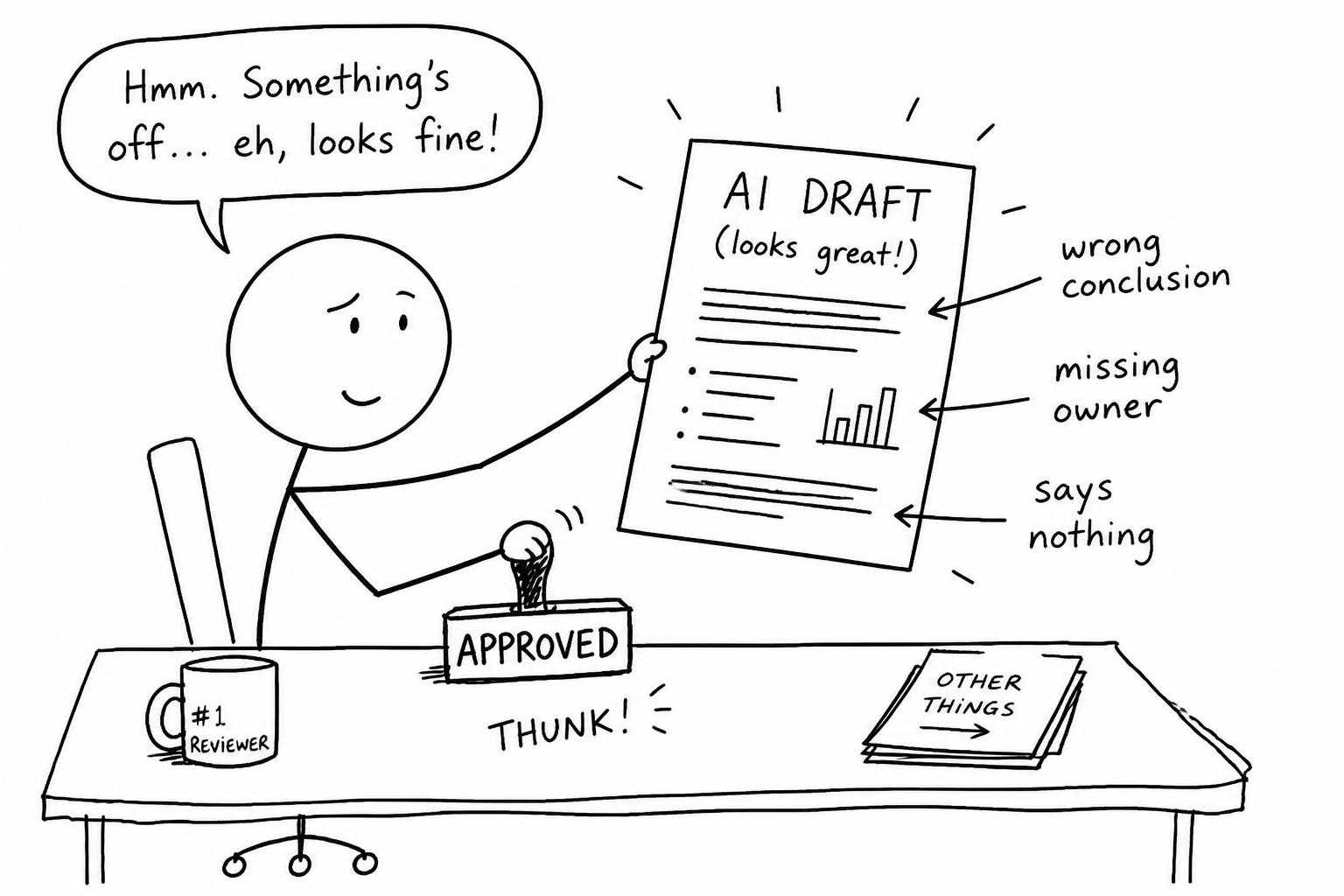
A reviewer opens an AI-assisted deviation report. The grammar is clean, the headings are in place, and the tone sounds just like your SOPs. Something still feels off, but they can't say what, so they tweak a few word choices and sign.
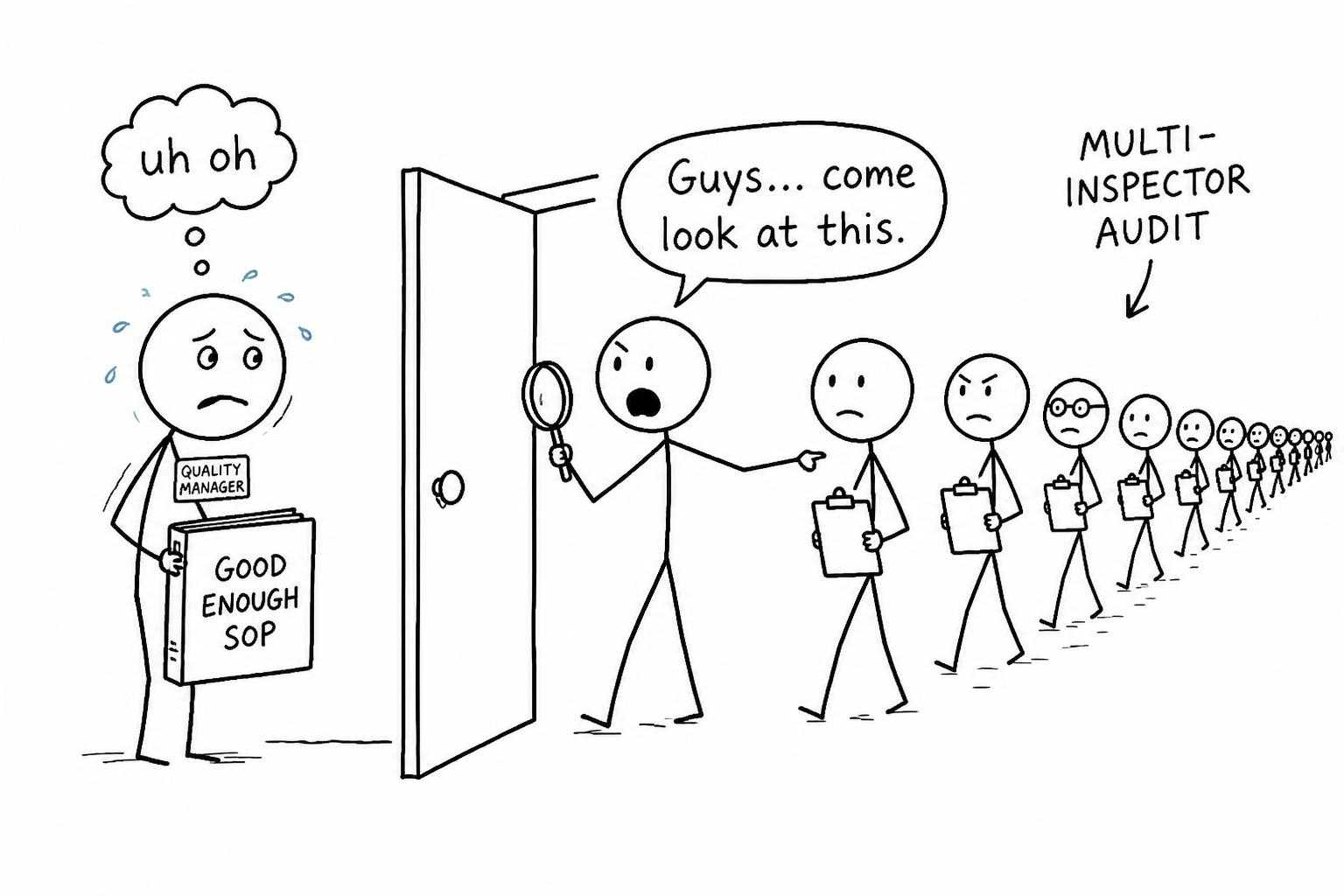
This happens to experienced reviewers all the time. Reviewing well depends on diagnosing why a document fails its reader, and that skill needs regular use. When drafts used to arrive rough, the problems announced themselves. Polished AI output hides them, so reviewers practice diagnosis less and the skill weakens. That's why the foundations of effective writing and reviewing matter more now than ever. A team that can produce good-looking documents but can no longer tell a good one from a bad one is carrying risk it can't see.
The fix: On the next AI-assisted draft you review, tie every comment to a reader problem: what will the reader misunderstand, miss, or be unable to act on? If you can't name the problem yet, keep reading until you can.
Learn more about our workshop, Better Reviewing Techniques. |
|
|
|
Free live session: The Reviewing Trap of AI |
AI may be saving your team time on drafting, but many teams are finding it costs them more time in review, because polished-looking text takes real effort to check and fix.
On Thursday, November 19 at 11:00 a.m. ET, Executive Consultant and Trainer Elizabeth Preston will cover: - why reviewing AI documents takes extra time
- frameworks and concrete steps for reviewing efficiently
- how to evaluate risk in AI-created documents and measure it with our PROS Readability Risk Assessment®
Has AI made your team's review queue longer or shorter? Save your seat here, or hit reply and I'll send you the details. |
|
|
|
The sourcing update that led with background |
Each issue we show a fictional regulated-industry document alongside our rewrite, so you can see exactly what changed and why. Original
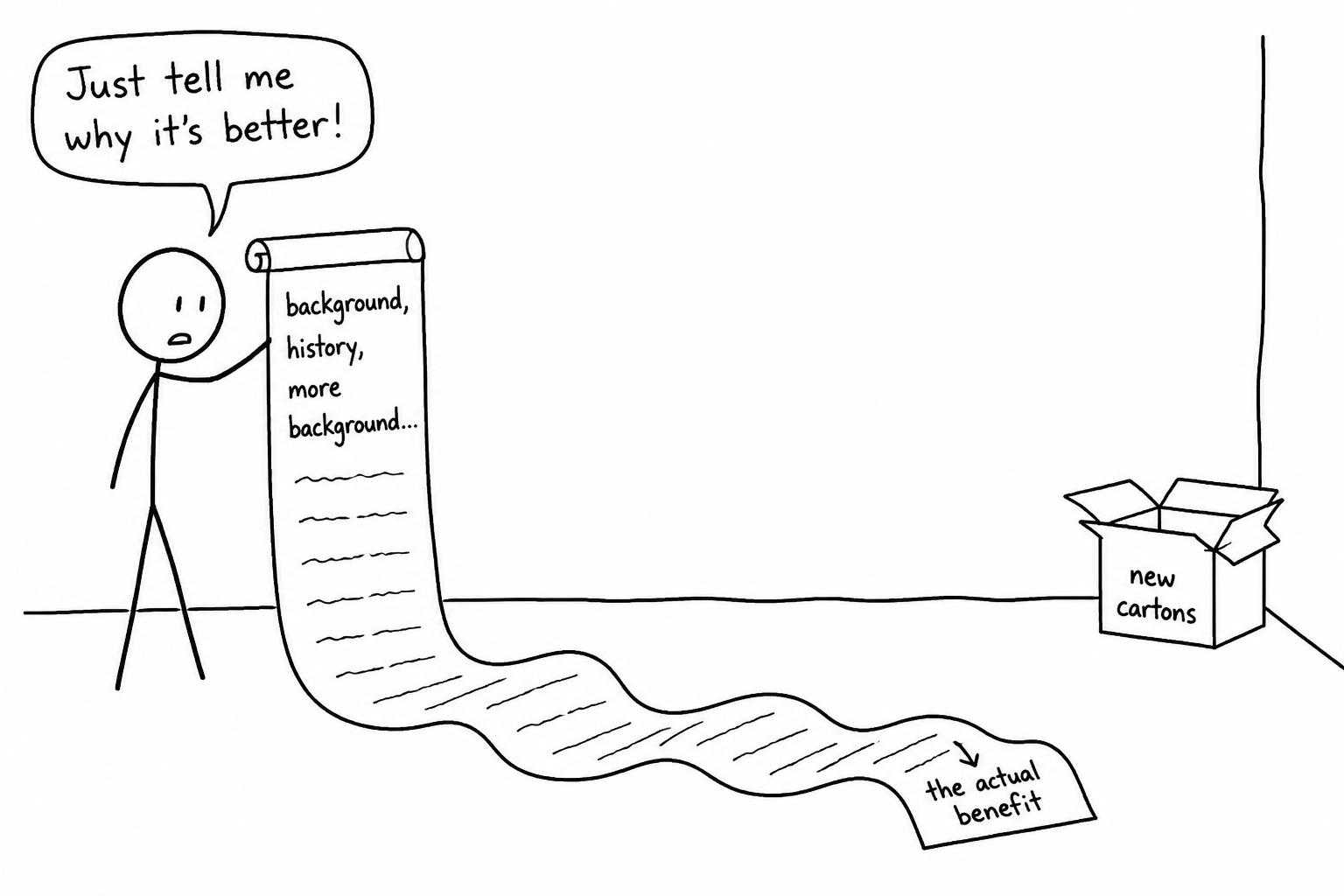
Currently, the cartons for these kits are procured from Company A and are manufactured in China and shipped to us. The new cartons, purchased from a US-based vendor, Company B, based in Camden, NJ, will allow us to reduce the lead time and help with planning. Additionally, the plastic tray structure and design inside the carton will be changed to paper which will provide environmental and sustainability benefits. Rewrite The new cartons will reduce lead time, because they're being purchased from a US- instead of China-based, vendor which will help with planning. Further, the new cartons are made from paper instead of plastic, which enhances sustainability and reduces environmental impacts. Why it works The original opens with background the reader probably already knows. The rewrite leads with what the reader wants to know, how the company benefits: shorter lead time and easier planning first, then the switch to paper. |
|
|
|
Thanks for reading!
Don't want to receive these emails? There's an unsubscribe button at the bottom. Copyright © 2026 Hurley Write. All rights reserved.
19701 Bethel Church Rd., Ste 103-144, Cornelius, NC 28031 |
|
|
|
Disclaimer: The documents shown in this newsletter are fictional samples created by Hurley Write for illustrative and educational purposes only. Any names, companies, data, or scenarios depicted are invented and do not represent real clients, organizations, or events. These materials should not be mistaken for, or used as, an actual client's work product. |
|
|
|
|