Hey, it's Pam!
When an FDA investigator reviews your deviation report, the root-cause logic matters as much as the findings themselves. This week, I'm looking at what a former FDA director pays attention to during an inspection, and where weak investigations can put your organization at risk.
Speaking of standards: PAM, our Professional Authoring Model, reduces reviewing times because it rewrites documents based on readability studies. Why does this matter? Because if your team is using AI to write, your review time is probably up, not down. Track it! Want to see how it works? Hit reply and I'll set up a demo. |
|
|
|
The one process most companies never standardize |
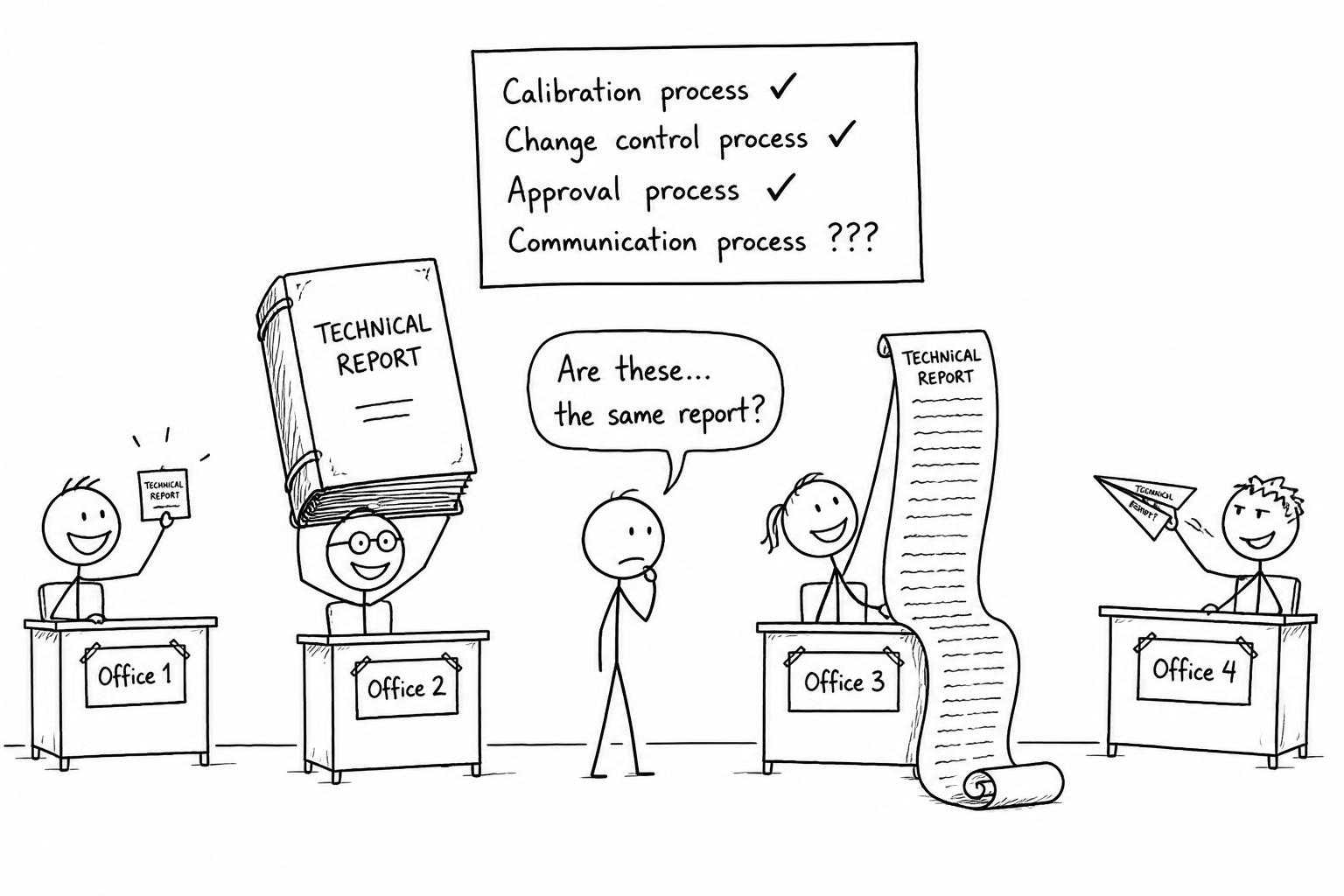
Companies have processes for just about everything: how equipment gets calibrated, how changes get approved, how quality gets checked. The one thing that rarely has a process is communication, written or oral, even though nearly everything else depends on it.
An engineering consulting firm we worked with ran into this across four California offices. Its engineers produced technical analyses that utilities and government agencies relied on, and their expertise was never in question. The challenge was getting everyone to communicate to the same standard.
We delivered a customized writing series for engineers in all four locations, and the firm reported clearer external communication and significant improvements in its engineers' writing. The fix: If your teams write across departments or sites, standardize communication the way you'd standardize any other process: - Agree on what quality looks like for documentation
- Create standards around writing and reviewing
- Build skills around the documents people produce every day
|
|
|
|
What a former FDA director looks for in your root-cause logic |
When an FDA investigator reads your investigation report, the patient at the end of the line is who they're thinking about.
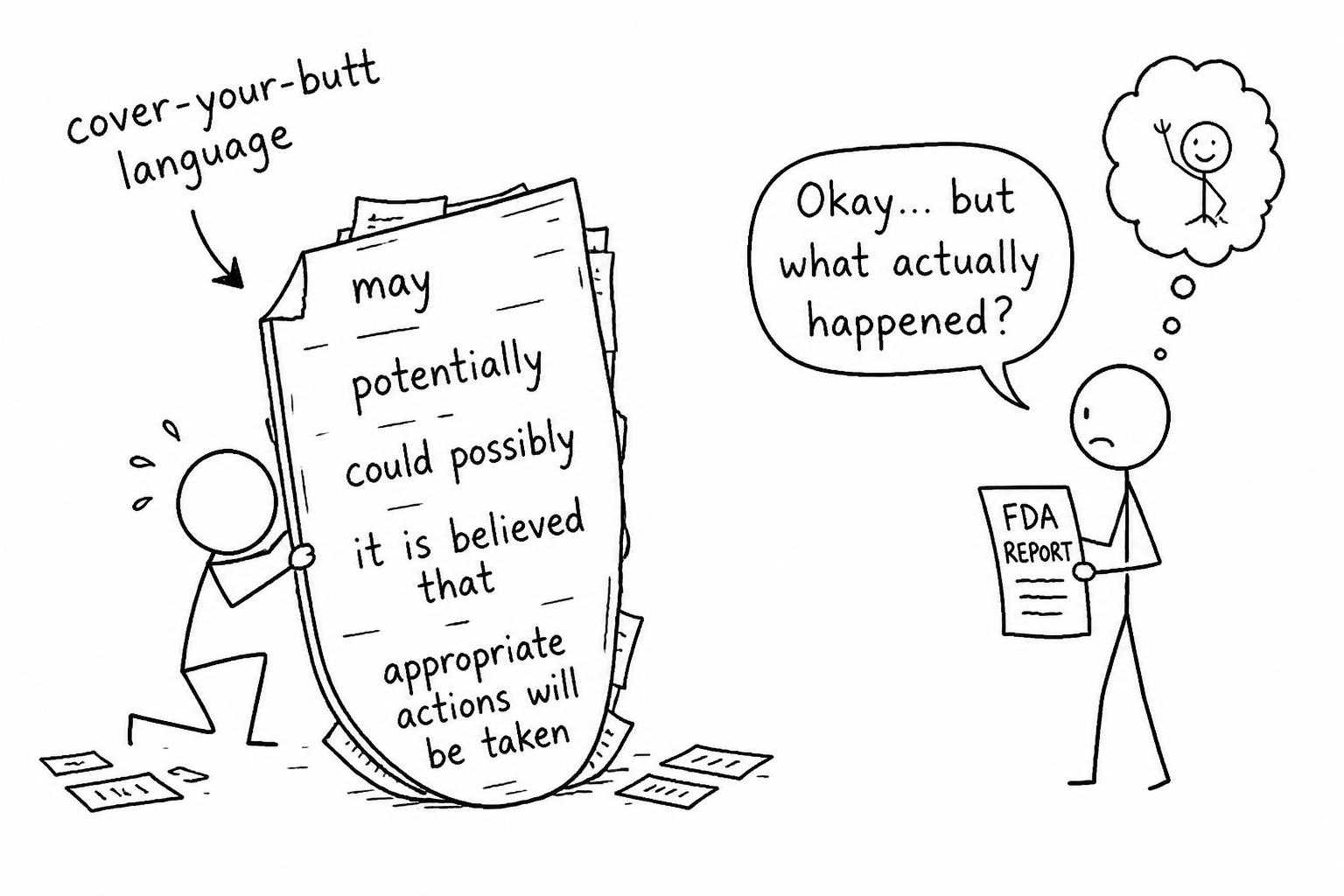
On this episode of The Writing Docs, Eric Pittman, former director of the FDA's Bioresearch Monitoring Division (West), explains what regulators evaluate during an inspection, why "cover-your-butt" language hurts readability, and how gaps in critical thinking, more than grammar, lead to warning letters.
Listen on Podbean or watch on YouTube.
What would an investigator make of the root cause in your last deviation report? Hit reply and send it over, and I'll tell you what we'd question. |
|
|
|
The deviation report that treated a guess as a finding |
Each issue we show a fictional regulated-industry document alongside our rewrite, so you can see exactly what changed and why. Original
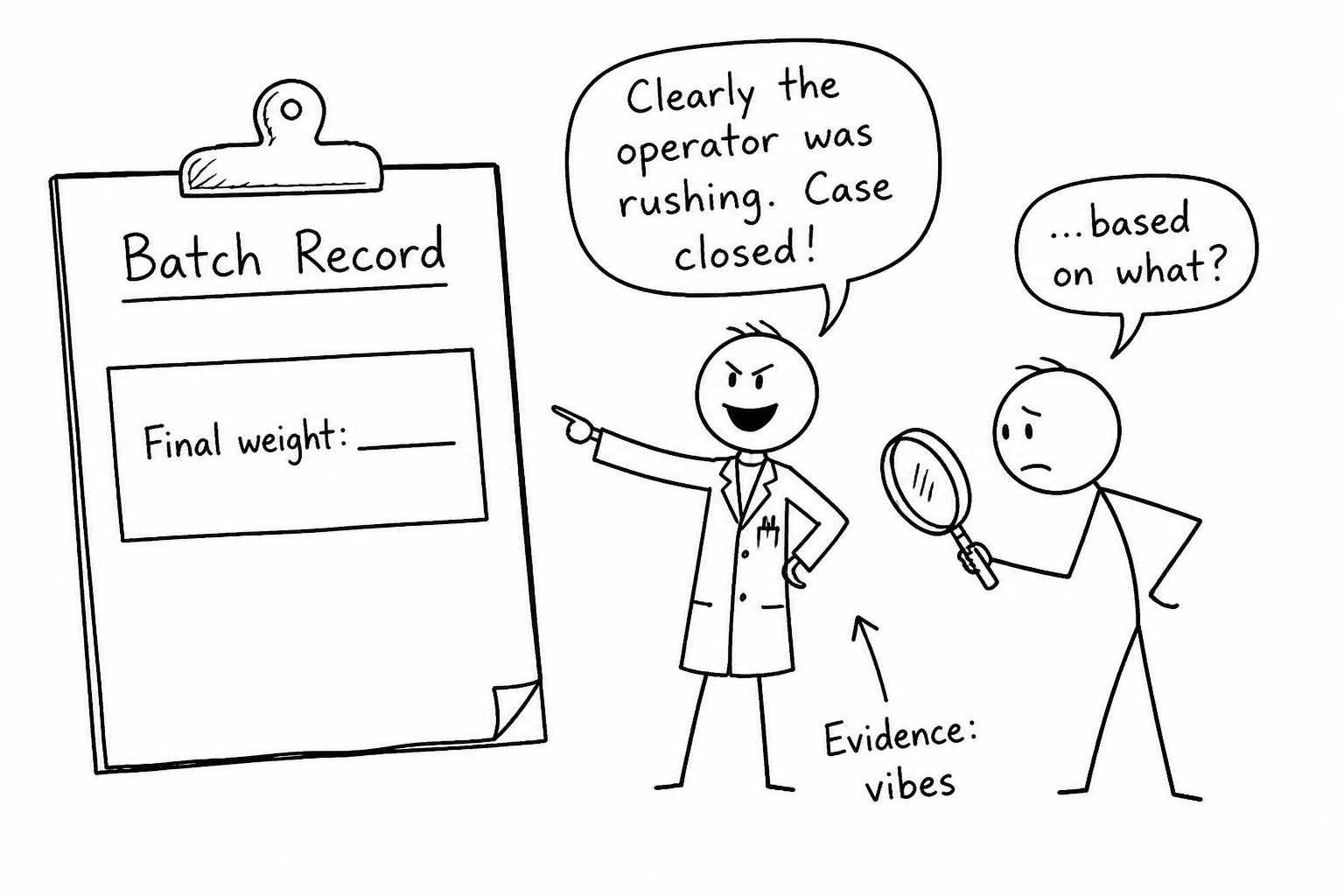
On 14Mar26, the operator failed to record the final weight for Lot 4471 in the batch record. The operator was rushing to finish before shift change and did not follow SOP-112. This deviation was caused by operator error. The operator has been retrained on SOP-112 and no further action is required. Rewrite - Description: On 14Mar26, the final weight for Lot 4471 was not recorded in the batch record (SOP-112, step 9).
- Observed: The entry was blank at batch record review, and step 9 falls near the end of the shift.
- Not yet confirmed: Whether shift timing contributed to the missed entry.
-
Next step: Review where step 9 sits in the batch record and whether the entry has been missed on other lots.
Why it works
The original presents a guess ("rushing to finish") as a finding and closes the report on it. The rewrite separates what was observed from what's still unconfirmed, and keeps the investigation open until it reaches the process. |
|
|
|
Thanks for reading!
Don't want to receive these emails? There's an unsubscribe button at the bottom. Copyright © 2026 Hurley Write. All rights reserved.
19701 Bethel Church Rd., Ste 103-144, Cornelius, NC 28031 |
|
|
|
Disclaimer: The documents shown in this newsletter are fictional samples created by Hurley Write for illustrative and educational purposes only. Any names, companies, data, or scenarios depicted are invented and do not represent real clients, organizations, or events. These materials should not be mistaken for, or used as, an actual client's work product. |
|
|
|
|