Hey, it's Pam!
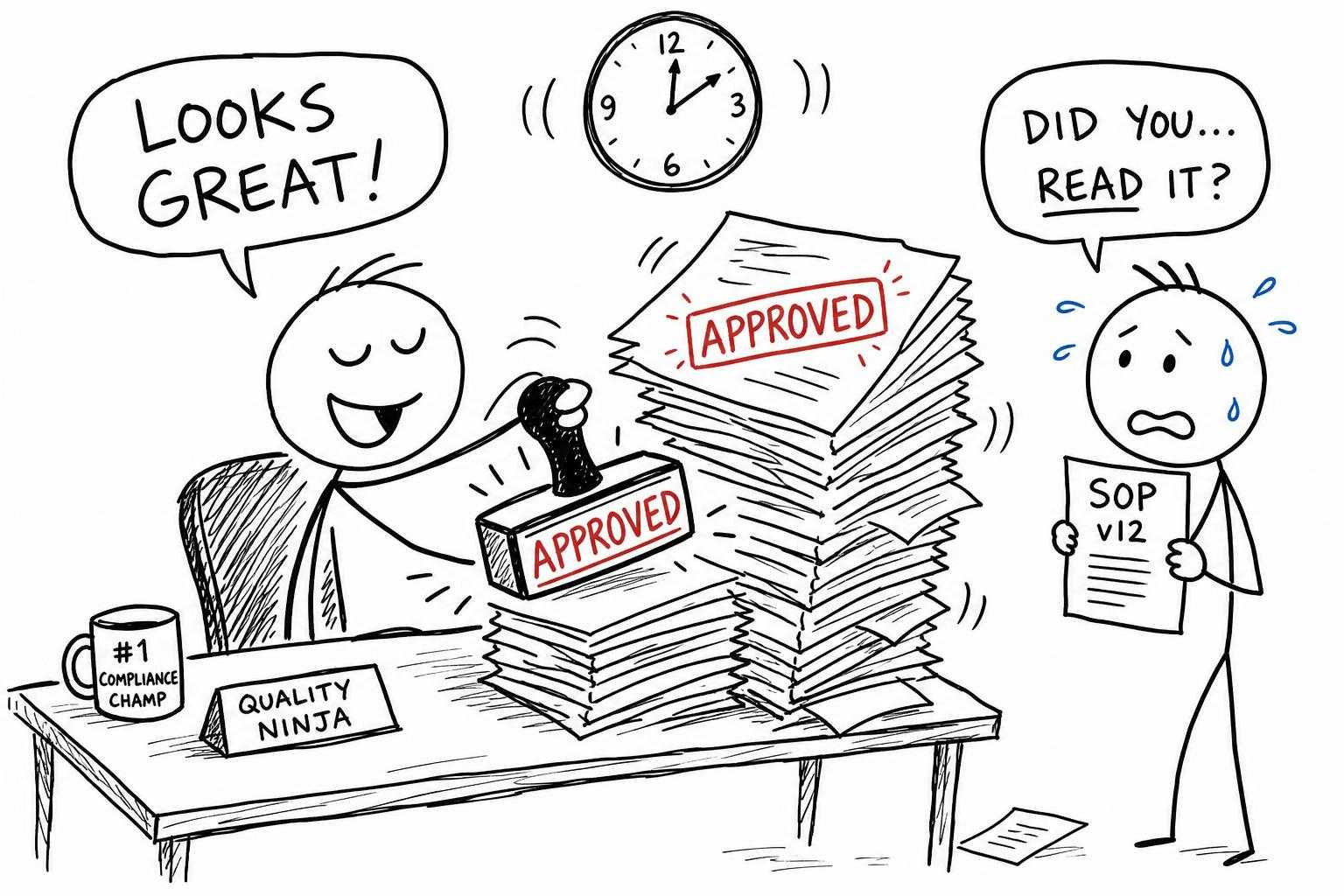
"I often just approve a document without reviewing it." A reviewer told us that during an assessment, and this week I'm looking at what it cost their company.
New on The Writing Docs this Thursday: Why do most FDA submissions fail? Carrie McMahon, PhD, explains why the "data dump" approach backfires, what's really behind "cease to evaluate" designations, and how unvetted AI tools create regulatory risk. Subscribe here so you don't miss it. |
|
|
|
The approval nobody actually read |
How many signatures are on the last SOP your team approved, and how many of those people read it start to finish?
Most reviewers I talk to are stretched thin. They have their own work, a queue of drafts waiting on them, and a real fear of being the person who holds up the project. So they skim, fix the few things that bother them, and sign.
That habit survives because nothing catches it right away. The document goes into the system looking reviewed, and the problems surface weeks or months later as a deviation, an experiment that has to be rerun, or an auditor's question that no one can answer.
Underneath it, there's usually no shared definition of what a review is supposed to accomplish. Without one, every reviewer makes up their own, and under time pressure the easiest version wins: a quick pass for typos and pet peeves, then a signature. The fix: Give your reviews a job description. Before a draft goes out, agree on: - who the document is for
- what that reader has to decide or do with it
- what the reviewer is responsible for checking (and what they can skip)
- how much time a real review of it will take
When reviewers know exactly what they're signing off on, their signature starts to mean something again. |
|
|
|
One experiment a month, when five were required |
A Fortune 1000 eyecare company asked us for help with two things: slow reviews and their engineers' writing. Our PROS Readability Risk Assessment® found something bigger.
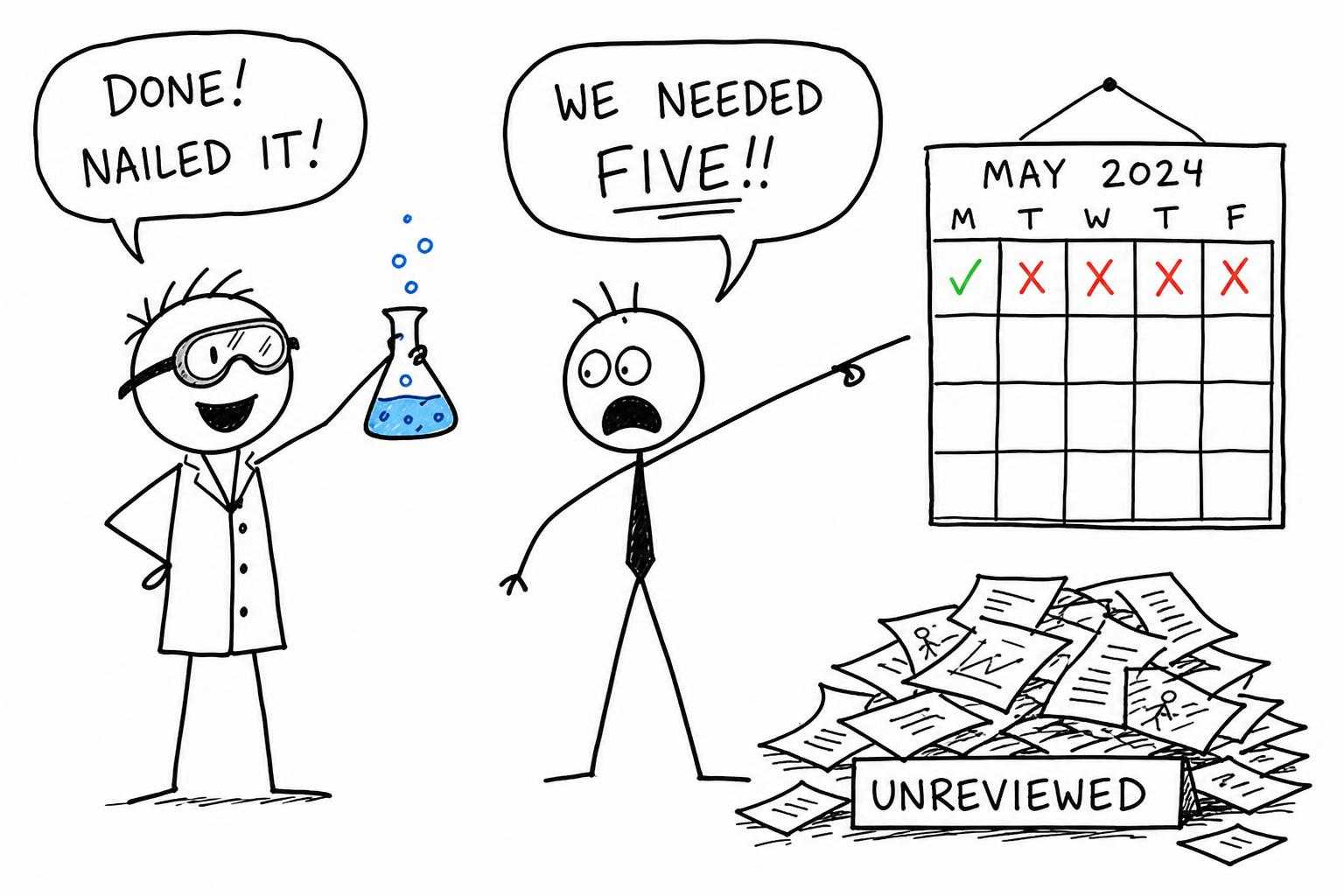
Engineers were expected to complete at least five experiments a month. Most completed one. The principal engineers wrote the SOPs, deviations, and protocols with no formal writing training beyond college, and the reviewers, also engineers, had been promoted with no training in reviewing for readability. One of them admitted to approving documents without reading them so they wouldn't hold up a project. The assessment traced the problem to the system around the writers: no shared standards or style guide, feedback driven by pet peeves, and nothing defining when reports were due or how they should be reviewed. Fixing that recovered $145,598 a year and 45% of the department's lost output.
Could the same thing be happening on your team? Take our six-question Readability Risk Check, or hit reply and I'll tell you what we'd look for in your documents. |
|
|
|
The investigation that led with its method |
Each issue we show a fictional regulated-industry document alongside our rewrite, so you can see exactly what changed and why. Original
Manufacturing Operations Investigation - Potential manufacturing-related root causes contributing to the torn label for batch 123 Drug Product Bag. The root cause investigation was performed using a 6M analysis framework to assess. The investigation concluded a potential contributing root cause of this event is insufficient method (SOP-011 and 025) potentially leading to improper label application and / or incomplete label adhesion to the DP bag. Although the method is seen as insufficient, its contribution to the event cannot be retrospectively confirmed, as the state of the label was not explicitly observed or documented at the time of application.
Rewrite Manufacturing Operations Investigation
Improper labeling and/or incomplete label application to the DP bag.
Potential Contributing Factors: - Unclear SOPs (011 and 025) that may have led to improper label application and/or label adhesion
Conclusion (Additional Actions): Since the label's state was not explicitly observed or documented when it was applied, the role the method played in the event cannot be confirmed. Tools Used to Analyze Root Cause: A 6M analysis framework (Manufacturing Ops, Packing and Shipment Ops, Clinical Site Ops). Why it works
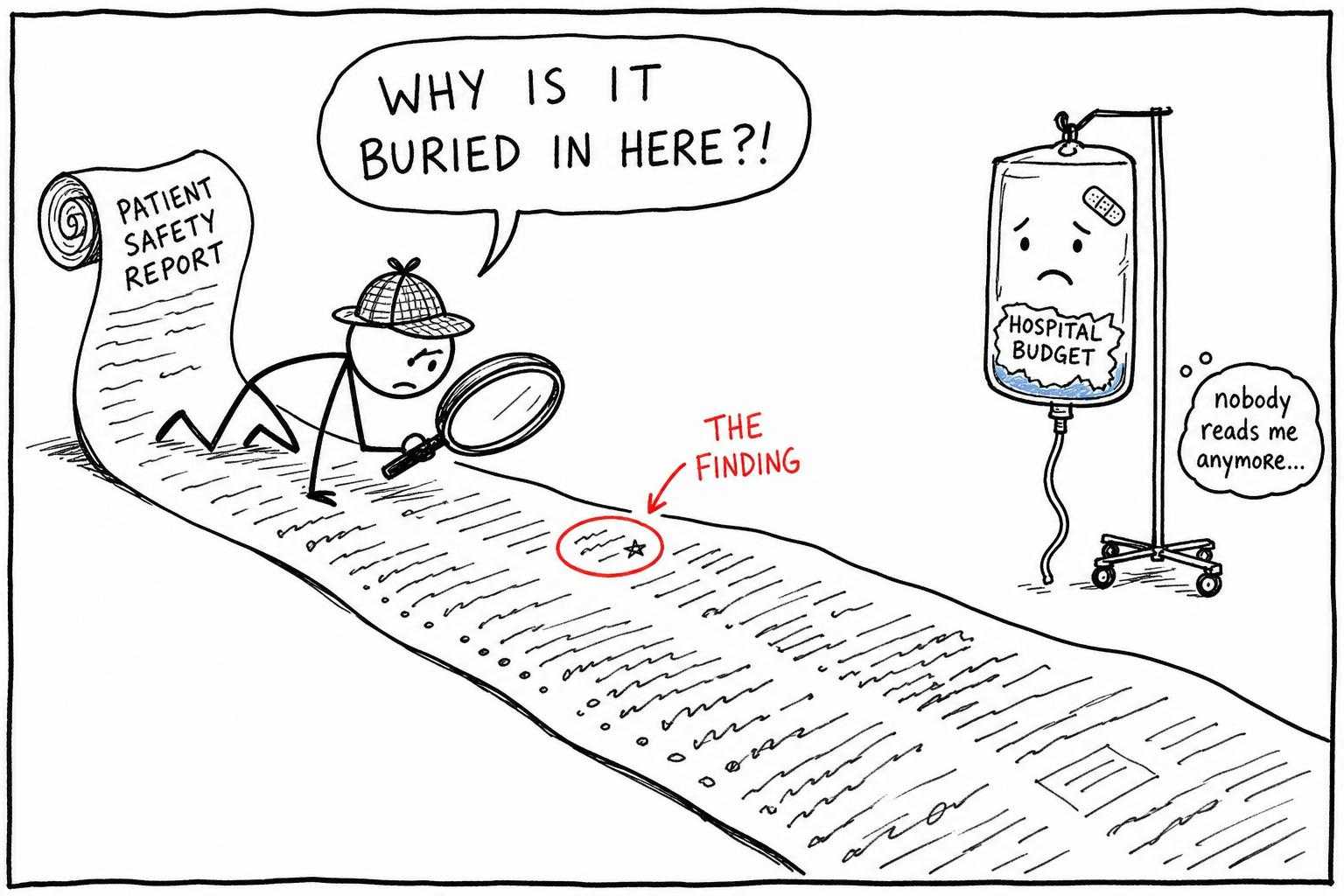
The original opens with how the investigation was done, when the reader needs what was found. The rewrite leads with the finding, replaces the vague "insufficient" with "unclear," and adds headings so each piece is easy to find. |
|
|
|
Thanks for reading!
Don't want to receive these emails? There's an unsubscribe button at the bottom. Copyright © 2026 Hurley Write. All rights reserved.
19701 Bethel Church Rd., Ste 103-144, Cornelius, NC 28031 |
|
|
|
Disclaimer: The documents shown in this newsletter are fictional samples created by Hurley Write for illustrative and educational purposes only. Any names, companies, data, or scenarios depicted are invented and do not represent real clients, organizations, or events. These materials should not be mistaken for, or used as, an actual client's work product. |
|
|
|
|