Hey, it's Pam
Every week, teams come to us looking for SOP training. And nearly every time, I have to start with the same uncomfortable truth about why what they've tried so far hasn't stuck.
Speaking of SOPs that need work: we built PAM, our Professional Authoring Model, to help teams apply readability principles to their SOPs consistently. PAM rewrites your SOPs according to what research says about how readers read and explains why each change works. No prompts. Five simple questions from a drop-down, and you get a redlined document with the reasoning behind every edit. Hit reply if you'd like a demo. |
|
|
|
Why most SOP training misses the mark |
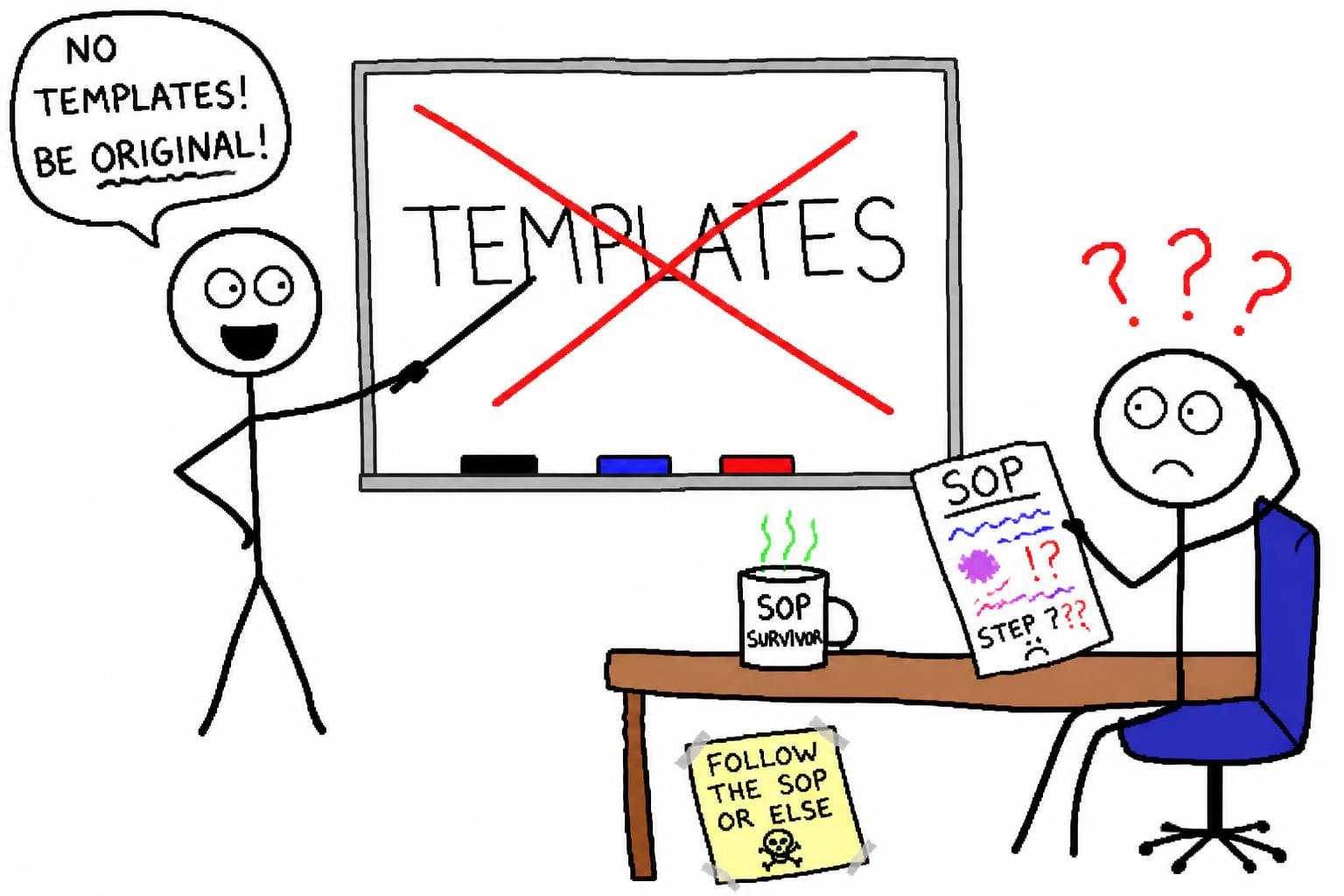
An SOP can be technically accurate and still fail when someone actually needs to use it. When a technician can't find a decision point, an engineer reads a requirement differently than a reviewer, or an operator has to stop and ask for clarification during a critical task, the document has created operational risk. And yet most SOP training programs focus on templates, style rules, and formatting tips. SOP problems are almost never isolated writing problems. An unclear procedure can delay batch release, complicate an audit, increase training time for new hires, produce inconsistent data, or push experienced staff into informal workarounds. A style guide doesn't fix that.
The training that actually works teaches your team to do a deep dive into who their users are, how they'll use the SOP, and what they need to know. Too many SOPs we've seen include far too much detail, aren't written to be user-friendly, and aren't organized in a way that makes sense for users and their needs. Good training also shows participants the differences between SOPs and policy, guidance, and work instructions and job aids (there are big differences among these documents and assuming that they're the same creates chaos).
That precision makes improvement measurable. And it's why a "quick refresher" or a Friday afternoon lunch-and-learn rarely moves the needle.
The fix: Before you sign up for another SOP writing course, ask your provider one question: what will participants do differently after the program? If they can only describe topics they'll cover, keep looking. |
|
|
|
Why SOP readability and usability matter |
Your SOPs may look fine on the surface, but unclear instructions, inconsistent reviews, and ineffective templates can create risks that stay hidden until a mistake, delay, or audit brings them to light.
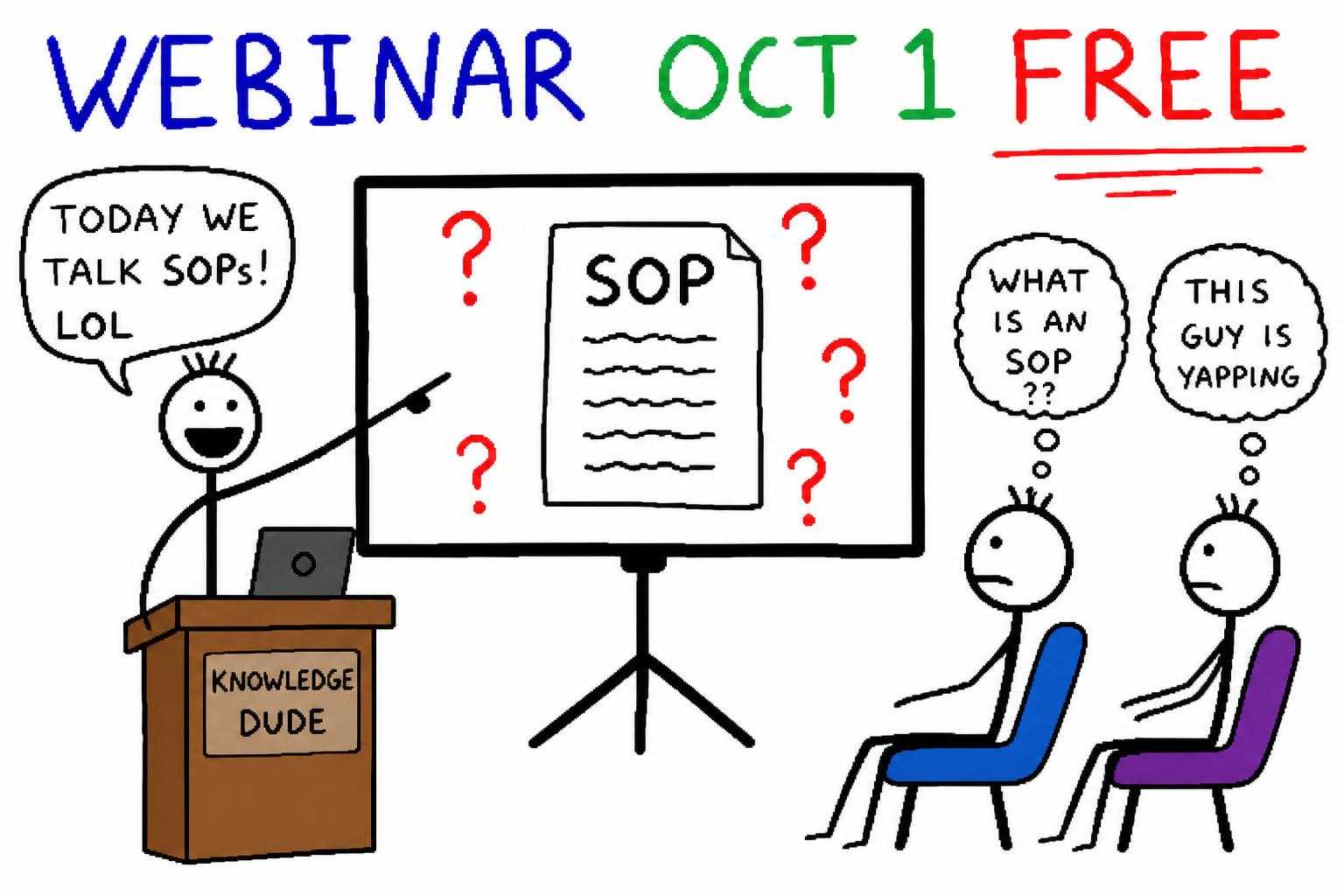
On October 1 at 12:00 noon EDT, we're hosting a free 30-minute virtual webinar: "Why SOP Readability and Usability Matter." We'll walk through three real case studies about SOPs: what the company was experiencing, how their SOPs contributed to the issue, and what we did to help solve the problem.
Speaker: MJ Hurley, MA And we'll be giving away a free SOP audit! So, if your SOPs could use a second look, this is a great place to start. Register below. |
|
|
|
The SOP that couldn't say when to clean |
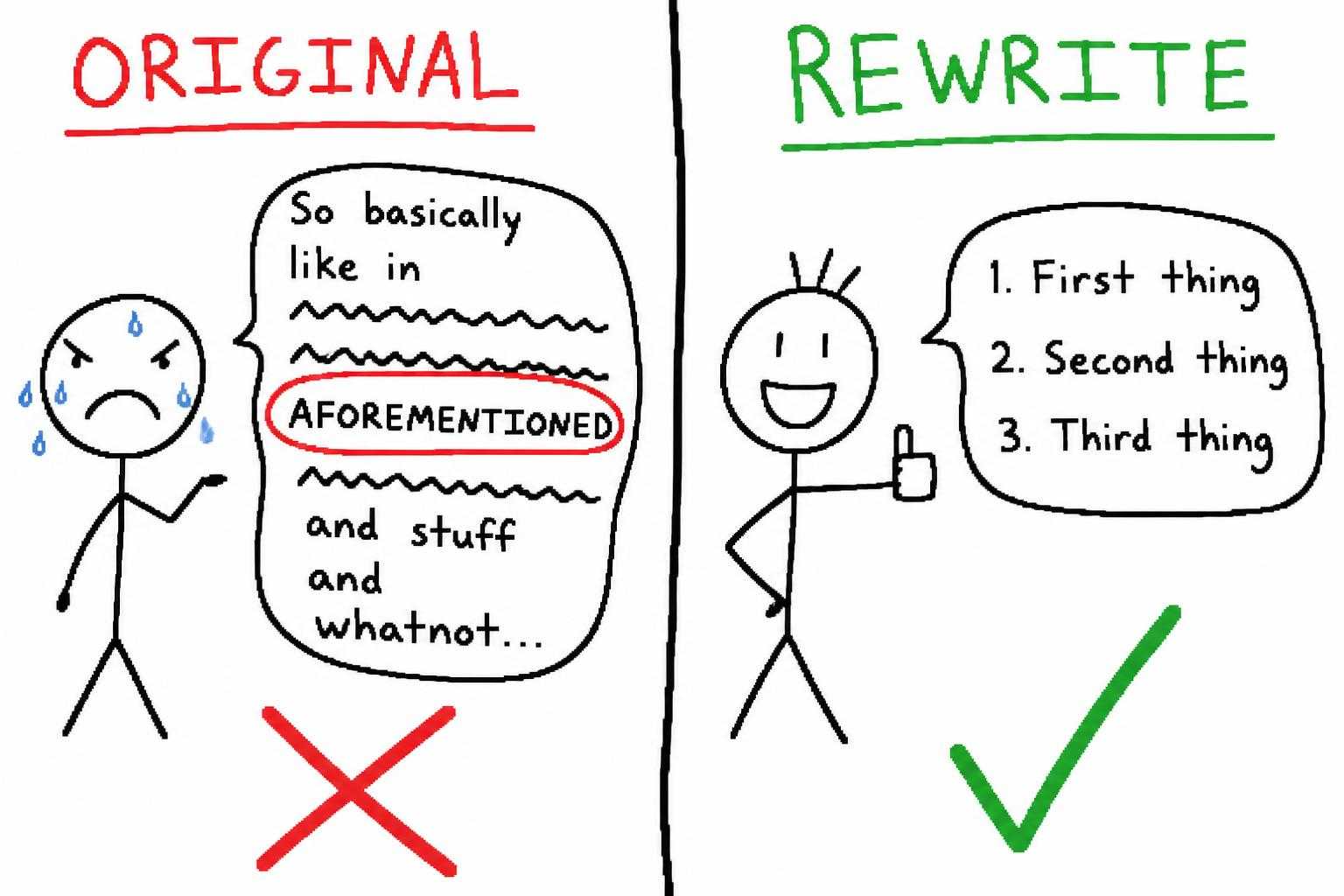
Each issue we show a real anonymized regulated-industry document alongside our rewrite, so you can see exactly what changed and why. Original
Investigation in all the aforementioned missed cleaning entries found that the language used in SOP-57 to outline routine cleaning is poorly worded. The SOP states that cleaning is "recommended every 6 months at a minimum." This is deemed to be not sufficiently specific. Furthermore, there is a direction for the analyst to coordinate with IT to disable alarms during cleaning. This direction has proved to be a hindrance to initiating cleaning efforts. Recent communications with the administrator revealed that this is not the current practice. It is apparent that a revision of SOP-57 is necessary to align with current practices at our company.
Rewrite
Investigation into the missed cleaning entries revealed that SOP-57 is unclear and incorrect: it does not specify when cleaning should be conducted and it states that IT must be contacted to disable alarms; however, the administrator confirms that disabling alarms is unnecessary. Recommendations: 1. Rewrite SOP-57 so that it states cleaning is to be done every January and June. 2. Delete the requirement to coordinate with IT to disable the alarm. Why it works
The original is redundant: the writer uses "poorly worded" and then "not sufficiently specific," which say the same thing. In terms of "Plain Language," "aforementioned" reads like legalese, and "not sufficiently specific" is interpretive (what does "sufficiently specific" mean?).The second paragraph repeats itself: "there is a direction," "the direction has proven to be a hindrance," "the administrator revealed that this is not the current practice," and "it is apparent that..." should be one sentence to avoid redundancy. The original states the problem, then the reason it's a problem, then the recommendation. That organizational pattern buries the point and invites wordiness. The rewrite uses Plain Language, keeps the same keywords, eliminates redundancy, and adds a clear recommendations section.
|
|
|
|
Thanks for reading!
Don't want to receive these emails? There's an unsubscribe button at the bottom. Copyright © 2026 Hurley Write. All rights reserved.
19701 Bethel Church Rd., Ste 103-144, Cornelius, NC 28031 |
|
|
|
Disclaimer: The documents shown in this newsletter are fictional samples created by Hurley Write for illustrative and educational purposes only. Any names, companies, data, or scenarios depicted are invented and do not represent real clients, organizations, or events. These materials should not be mistaken for, or used as, an actual client's work product. |
|
|
|
|