Hey, it's Pam!
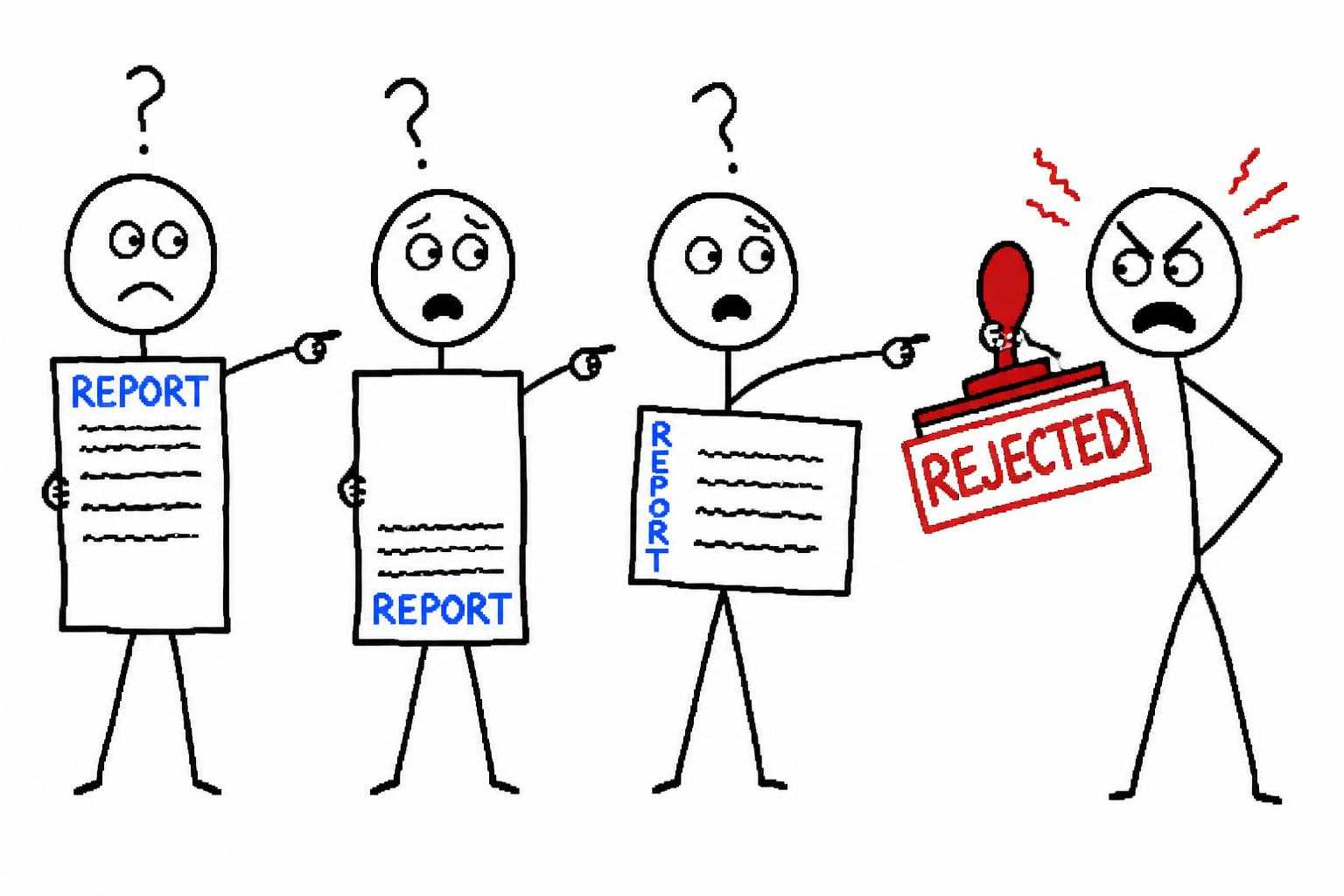
I reviewed three versions of the same report last week. All technically accurate. All organized differently. The reviewer sent all three back. This week, I'm looking at why shared writing standards do more for document quality than individual talent ever will.
Speaking of standards: we built PAM, our Professional Authoring Model, to help teams apply them consistently. PAM rewrites your documents according to readability principles and explains why each change works. No prompts. Five simple questions from a drop-down, and you get a redlined document with the reasoning behind every edit. Hit reply if you'd like a demo. In this issue: - Your team writes. But are the documents consistent?
- A workshop built for the people who approve the writing
- The white label that hid a material mix-up
|
|
|
|
Your team writes. But are the documents consistent? |
Picture a proposal that reaches a senior stakeholder with three different terms for the same product. Or a technical report that moves through five reviewers, each one changing the tone, formatting, and level of detail. Same root cause every time: the team has no shared standard for how documents should be written. Without shared standards, teams rely on personal preference. A reader who knows where to expect the purpose, key findings, risks, and requested action can review faster. A writer who understands the expected level of detail makes stronger decisions before sending a draft. Over time, the organization produces documents that feel coherent even when multiple people contribute.
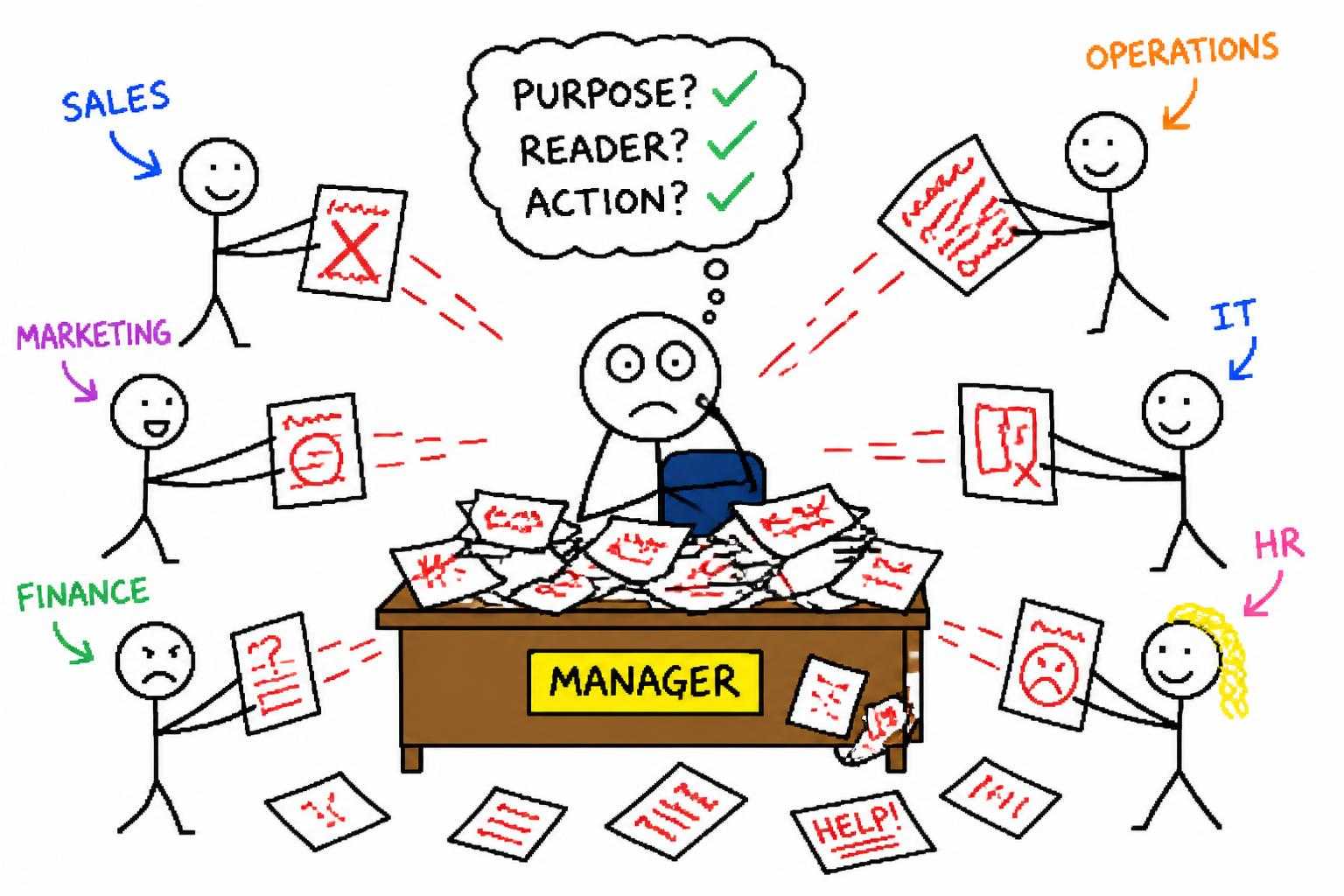
Standards also change how reviews work. Instead of vague comments like "this doesn't read well," a reviewer can point to the real issue: the recommendation is buried, the headings don't reflect the reader's questions, the evidence doesn't support the claim. That kind of feedback is more useful to the writer and more efficient for the reviewer. The fix: agree on what good looks like for your most common documents and reinforce it in daily work. That investment is small compared with the recurring cost of scattered comments, delayed approvals, and documents that restart the conversation instead of resolving it. |
|
|
|
A workshop built for the people who approve the writing |
Managers sit at the intersection of strategy, execution, and people. They translate executive direction into workable plans, turn technical input into decisions, and review documents from across their teams. Generic grammar instruction doesn't address that reality.
That's why we designed a workshop specifically for managers who review documents, "Better Reviewing Techniques." It shows participants how to reduce reviewing time, give actionable feedback, and put standards in place so that reviewing is, to put it simply, easier and requires less rewriting. It strengthens their ability to diagnose a draft at the strategic level: Is the outcome clear? Does the evidence support the claim? Is the requested action visible? These higher-value review questions result in better outcomes and a better review process.
When managers review with structure, their teams spend less time interpreting messages and more time doing the work those messages were meant to enable.
Hit reply if you want to learn more about the workshop, or click below. |
|
|
|
The white label that hid a material mix-up |
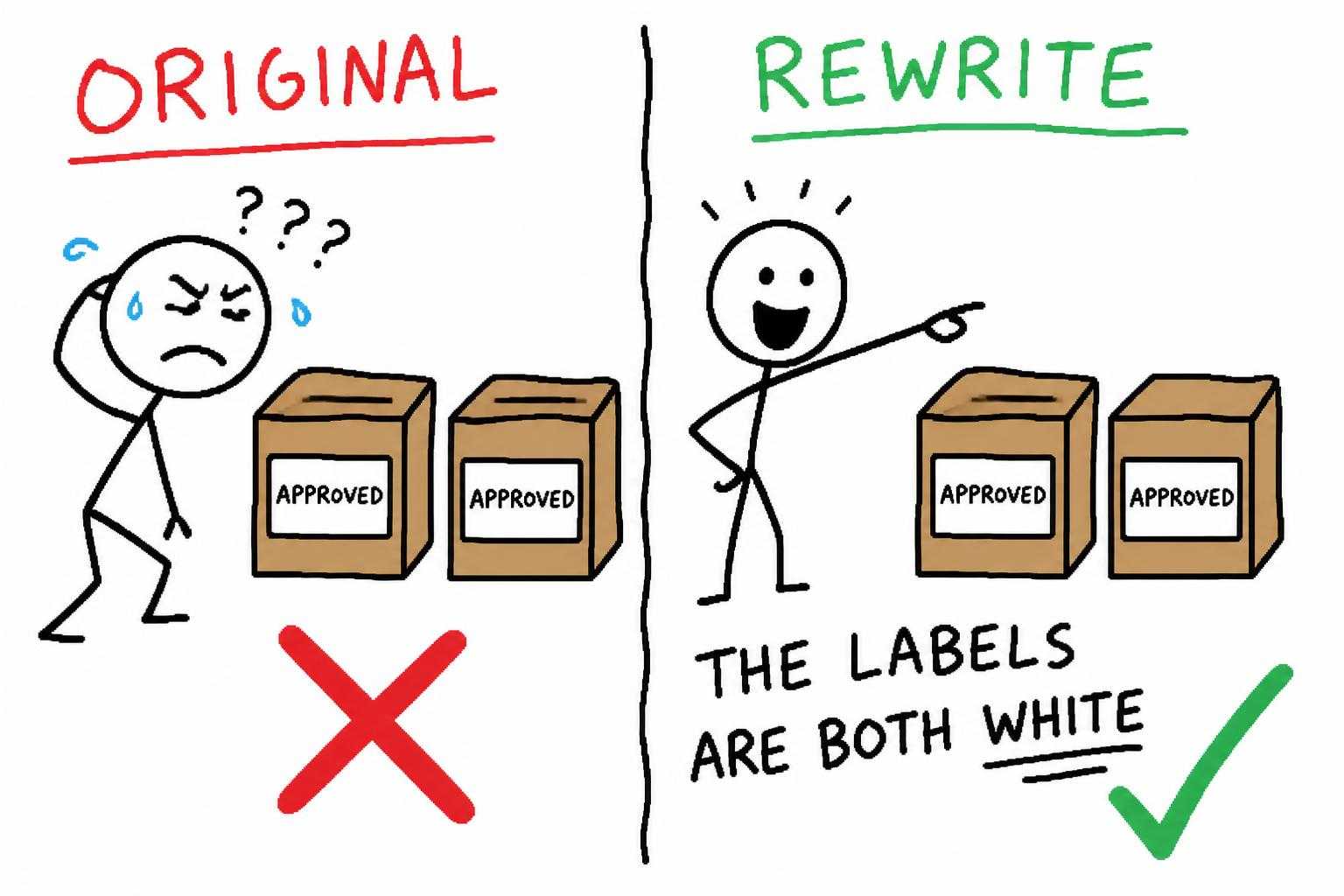
Each issue we show a real anonymized regulated-industry document alongside our rewrite, so you can see exactly what changed and why. Original
Manufacturing associates who receive materials into the cleanroom document information such as lot number and expiration date, however, disposition status is not something they are trained to focus on. The expectation is that there are checks and balances prior to materials entering the cleanroom to ensure they are appropriate for commercial use. Moreover, the label for "Approved for Specific Use" materials is white and it's not uncommon for Manufacturing associates to receive Conditionally Approved materials for commercial use which are also on white labels. There are no visual cues helping users understand critical information more quickly and efficiently.
Rewrite Manufacturing associates are not trained to focus on disposition status. Additionally, "Approved for Specific Use" and "Conditionally Approved" labels are both white, which prevents these associates from quickly discerning critical information, such as disposition status. Why it works
The original contains unnecessary information and follows a common but flawed structure: it explains why the problem might exist before naming the real issue. The white labels deserve the lead because they're what actually prevents associates from distinguishing material disposition. But because the explanation comes first, readers treat it as most important (per readability studies). The sentence about "checks and balances" adds no value to the finding and distracts the reader. The rewrite gets straight to the point without rationalizing the why. Same facts. Faster to the problem that needs fixing.
|
|
|
|
Thanks for reading!
Don't want to receive these emails? There's an unsubscribe button at the bottom. Copyright © 2026 Hurley Write. All rights reserved.
19701 Bethel Church Rd., Ste 103-144, Cornelius, NC 28031 |
|
|
|
Disclaimer: The documents shown in this newsletter are fictional samples created by Hurley Write for illustrative and educational purposes only. Any names, companies, data, or scenarios depicted are invented and do not represent real clients, organizations, or events. These materials should not be mistaken for, or used as, an actual client's work product. |
|
|
|
|