Hey, it's Pam!
This week I'm looking at a problem I see in almost every regulated industry document we work with: accurate, well-researched reports that get kicked back because the reader can't find the point. Structure is the fix, and it's a skill your team can build.
Hit reply and tell me: what's the biggest writing headache on your team right now? I read every response. |
- The report is accurate. But can the intended reader find the point?
-
How AESC engineers got their technical writing in shape
- The torn label that buried its own investigation
|
|
|
|
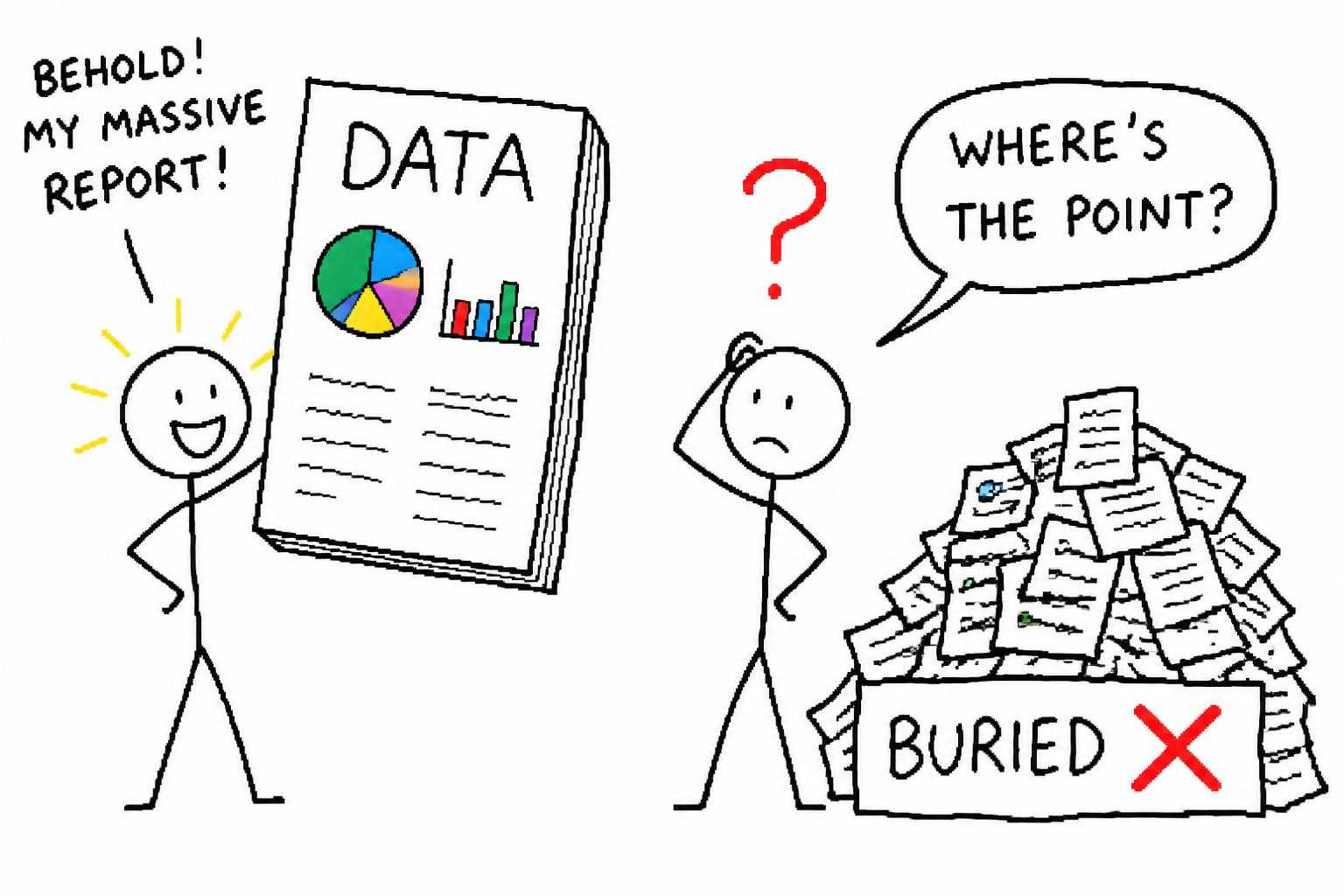
The report is technically accurate. But can your reader find the point?
|
I see this repeatedly across the organizations we work with: a report with solid data, sound analysis, and the right technical detail that gets rejected again and again. Why? Because the reader doesn't understand the point or has to work too hard to find it. While the report is technically accurate, it doesn't adhere to principles of readability; that is, how easily a reader can digest and use the information. And this is the point too many organizations miss: they think readability means grammatically correct, but grammar is a very small piece of readability (in fact, it's the least important thing about a document).
Readability is a constant, regardless of who your reader is, but readers also need different things from different documents, so how the information is structured matters. A lot. While many writers default to chronological structure when writing (typically because it's easy0, the reality is that most readers are skimmers, which means that chronological order doesn't work. The fix? Before you begin writing, define the outcome: what conclusion do you want the reader to reach? What do your readers need to know and when do they need to know it? What information is critical and what isn't? How many readers are there and at what levels in the organization?
That's what we train. And it's what ensures that documents pass the readability test.
We've also built our own AI tool, PAM, that not only rewrites documents according to readability principles (what we teach in our workshops), but explains why the rewrite works. It's a closed system. It redlines documents and asks the right questions, so prompts are eliminated. Hit reply if you'd like a demo. |
|
|
|
How AESC engineers got their technical writing in shape |
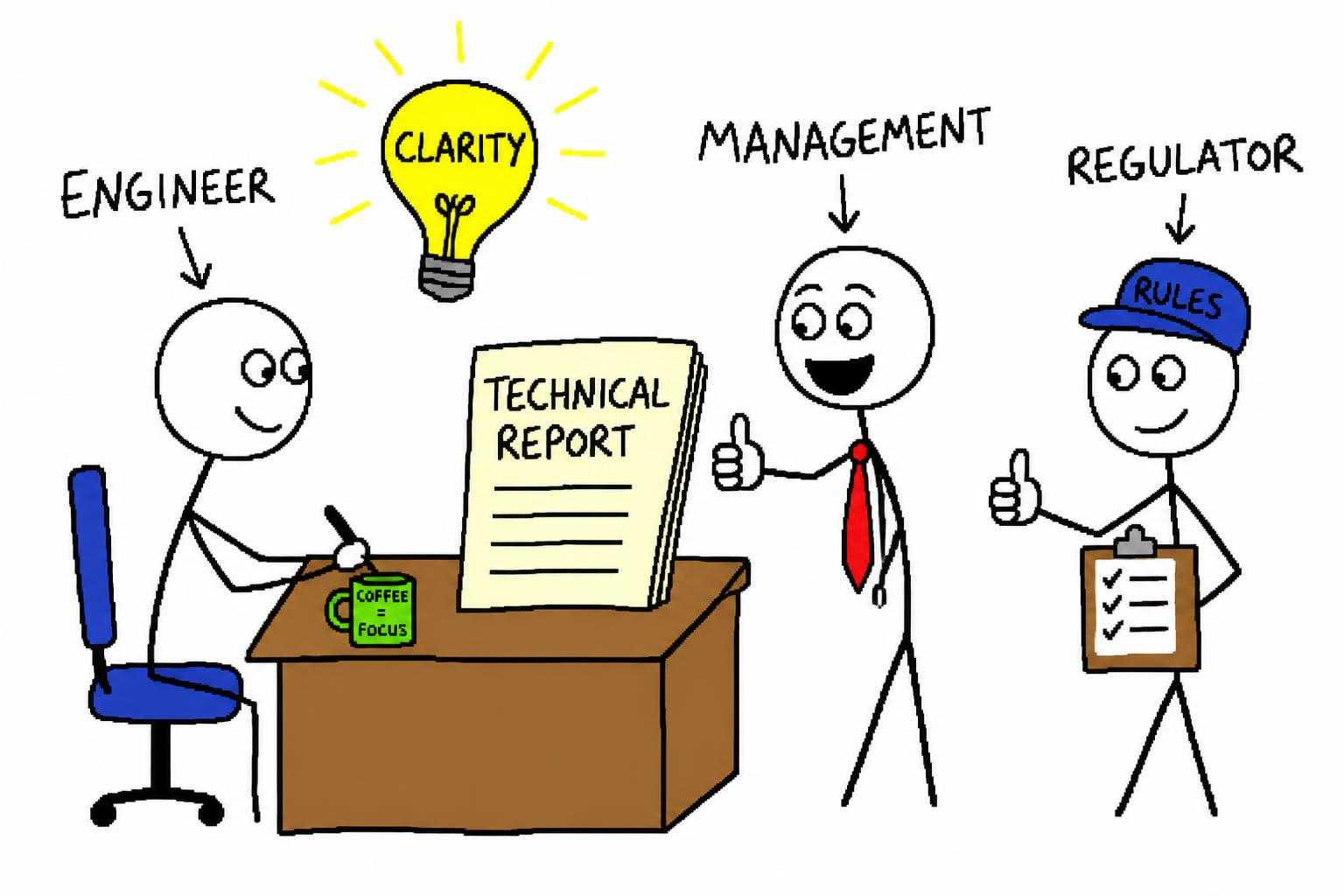
Alternative Energy Systems Consulting (AESC) is an energy engineering firm with four California offices and a client list that includes utilities, government agencies, and large energy users. Their engineers are sharp. Their writing wasn't.
The problem: documents needed to work for both technical and nontechnical readers, including management, accounting, and regulators. Engineering managers were spending too much time reviewing and the results still weren't consistent across locations. A course at each office wasn't practical, so AESC came to us.
We designed a custom live webinar with six modules, each built around writing samples from AESC's own documents. Participants got individualized feedback before and after the series to track real improvement.
The result was company-wide. Mike Casey, Engineering Manager at AESC, put it this way: "My writing has become clearer and more polished, and I think it will continue to improve as I use the things I learned in the webinar. I have also noticed significant improvement in our other engineers' writing."
If your team's documents need to hold up to a technical audience and still make sense to everyone else, hit reply and tell me what's getting in the way. |
|
|
|
The torn label that buried its own investigation |
Each issue we show a real anonymized regulated-industry document alongside our rewrite, so you can see exactly what changed and why. Original
Manufacturing Operations Investigation - Potential manufacturing-related root causes contributing to the torn label for batch 123 Drug Product Bag. The root cause investigation was performed using a 6M analysis framework to assess. The investigation concluded a potential contributing root cause of this event is insufficient method (SOP-011 and 025) potentially leading to improper label application and / or incomplete label adhesion to the DP bag. Although the method is seen as insufficient, its contribution to the event cannot be retrospectively confirmed, as the state of the label was not explicitly observed or documented at the time of application.
Rewrite Manufacturing Operations Investigation
Improper labeling and/or incomplete label application to the Drug Product (DP) bag.
Potential Contributing Factors: - Unclear SOPs (011 and 025) may have led to improper label application and/or label adhesion
Conclusion: Application of the label was not explicitly observed or documented; therefore, the role application played in the event cannot be confirmed. Tools Used to Analyze Root Cause: A 6M analysis framework (Manufacturing Ops, Packing and Shipment Ops, Clinical Site Ops). Why it works
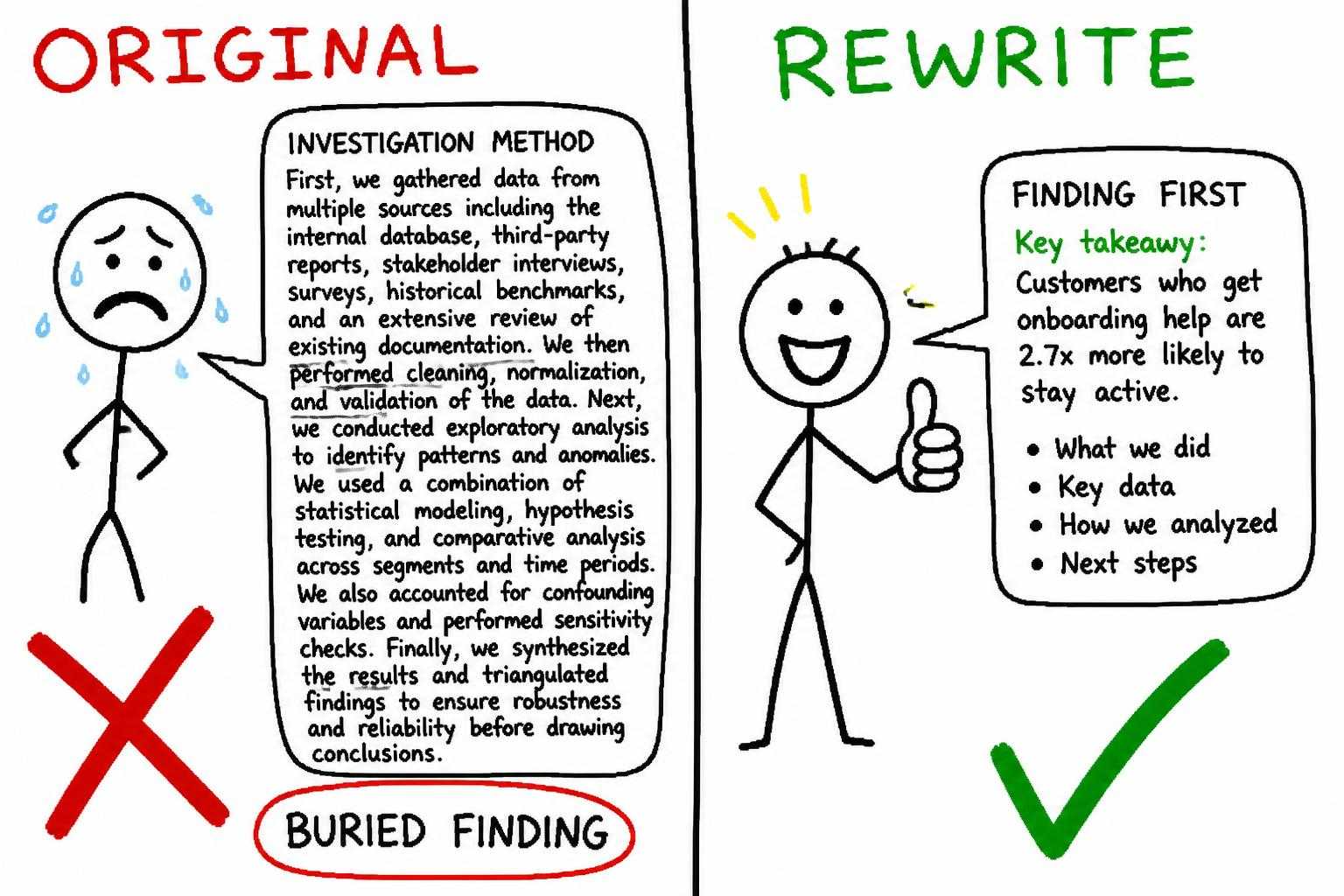
The original's structure is the problem: it starts with the least important information. The investigation method gets the first sentence. The finding gets buried in the middle. The conclusion comes last, wrapped in a caveat.
Readers of investigation reports need the finding first. What happened? What caused it? What can we confirm? The rewrite leads with the finding, follows with contributing factors as a bullet for fast scanning, then gives the conclusion and tools used. It also removes the redundancy of "The root cause investigation was performed using a 6M analysis framework to assess" where "to assess" adds nothing, and drops "insufficient" in favor of "unclear," which actually tells the reader what the problem was.
Same facts. Better order. Faster to act on. |
|
|
|
Thanks for reading!
Don't want to receive these emails? There's an unsubscribe button at the bottom. Copyright © 2026 Hurley Write. All rights reserved.
19701 Bethel Church Rd., Ste 103-144, Cornelius, NC 28031 |
|
|
|
Disclaimer: The documents shown in this newsletter are fictional samples created by Hurley Write for illustrative and educational purposes only. Any names, companies, data, or scenarios depicted are invented and do not represent real clients, organizations, or events. These materials should not be mistaken for, or used as, an actual client's work product. |
|
|
|
|