Hey, it's Pam! Review cycles are eating your team's time. This week I'm making the case that the problem usually isn't the writing. Before you dig in: we're hosting a free webinar on de-risking your documentation. If you work in a regulated industry, this one is for you. Save your seat here. 📅 Wednesday, August 26, 2026
🕚 11:00 AM–12:00 PM ET Hit reply and tell me how many rounds of review a typical document goes through on your team. I read every response. In this issue: - Why expert reviewers still produce useless feedback
- How a pharma company cut duplicative SOPs and freed up resources
- Copy makeover: the pressure alarm that buried its own point
|
|
|
|
Your reviewer is an expert. That doesn't mean they're reviewing well.
|
Here's something I see a lot: - A document goes to review.
- The subject matter expert is sharp and knows the content cold.
-
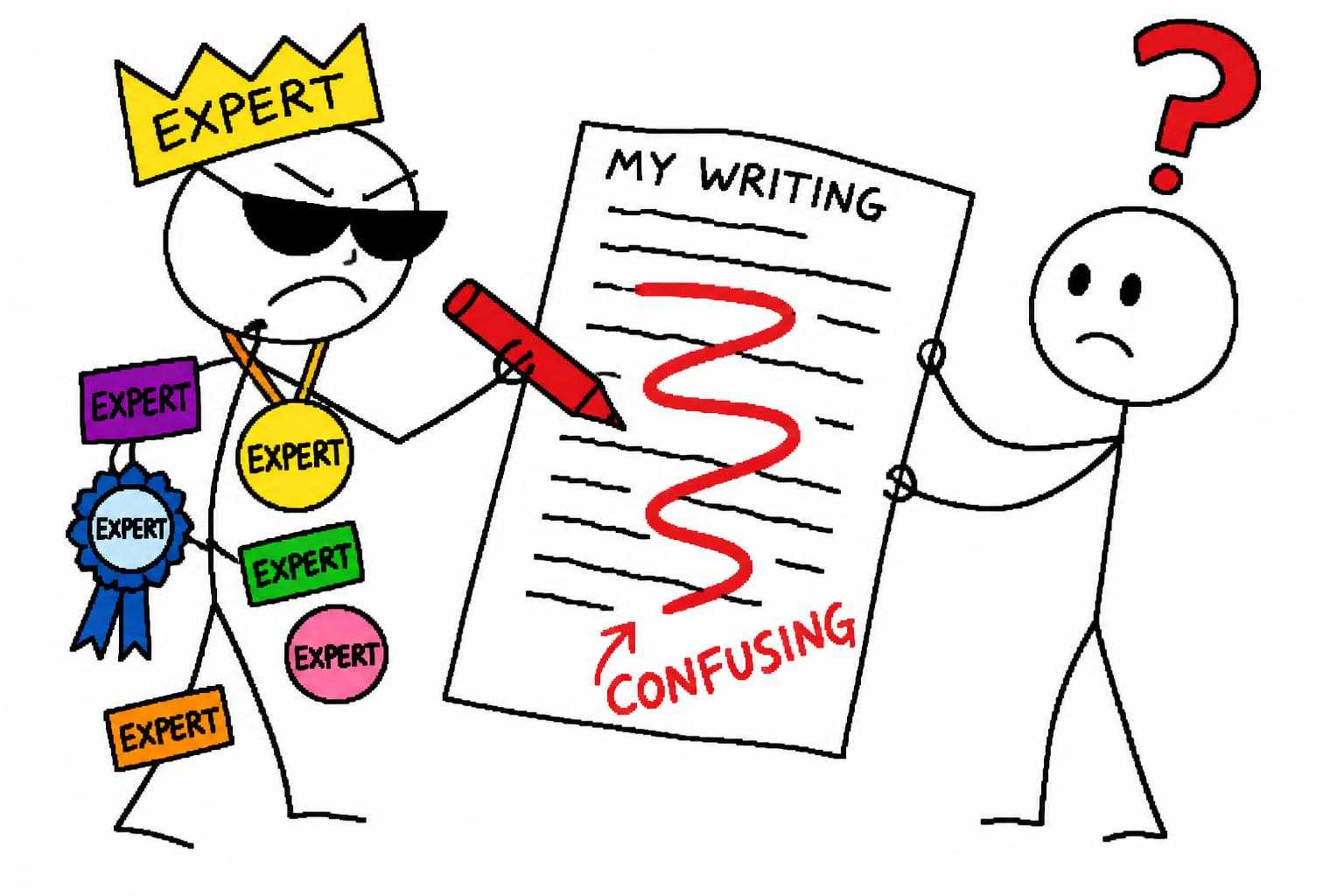
The feedback doesn't improve document quality, typically because it's personal preference, vague notes ("make this clearer"), or rewrites for the sake of rewrites that add no value to the document.
Technical expertise and reviewing skills aren't the same. An expert often infers missing information because they know the subject, which means they often don't understand that a less specialized reader can't follow the reasoning. They also rarely, if ever, review for readability and often focus on rewriting rather than asking good questions of the author so that the author can improve their skills.
The fix is a review sequence, not just good instincts. Before marking up a document, a reviewer should establish, with the author's input, who the document is for, what decision it needs to support, and what information that reader needs. Then work from large to small: desired outcome first, logic and completeness second, language last. Skipping straight to line edits wastes everyone's time because line edits often fail to address the issue of document readability and usability.
Specific feedback makes a real difference too. "This is confusing" sends the author back to the drawing board with no direction. "How does this information apply to the conclusion you want the reader to come to" gives them direction and, because it's a question rather than a directive, encourages the author to think more critically about what they're trying to accomplish. The second comment closes the loop in one round. The first opens three more.
If your team's review cycles keep getting longer and document quality doesn't improve, the issue probably isn't the writing. Hit reply and tell me what your review process looks like. I'm happy to take a look. |
|
|
|
How a multinational pharma company cut SOP overload |
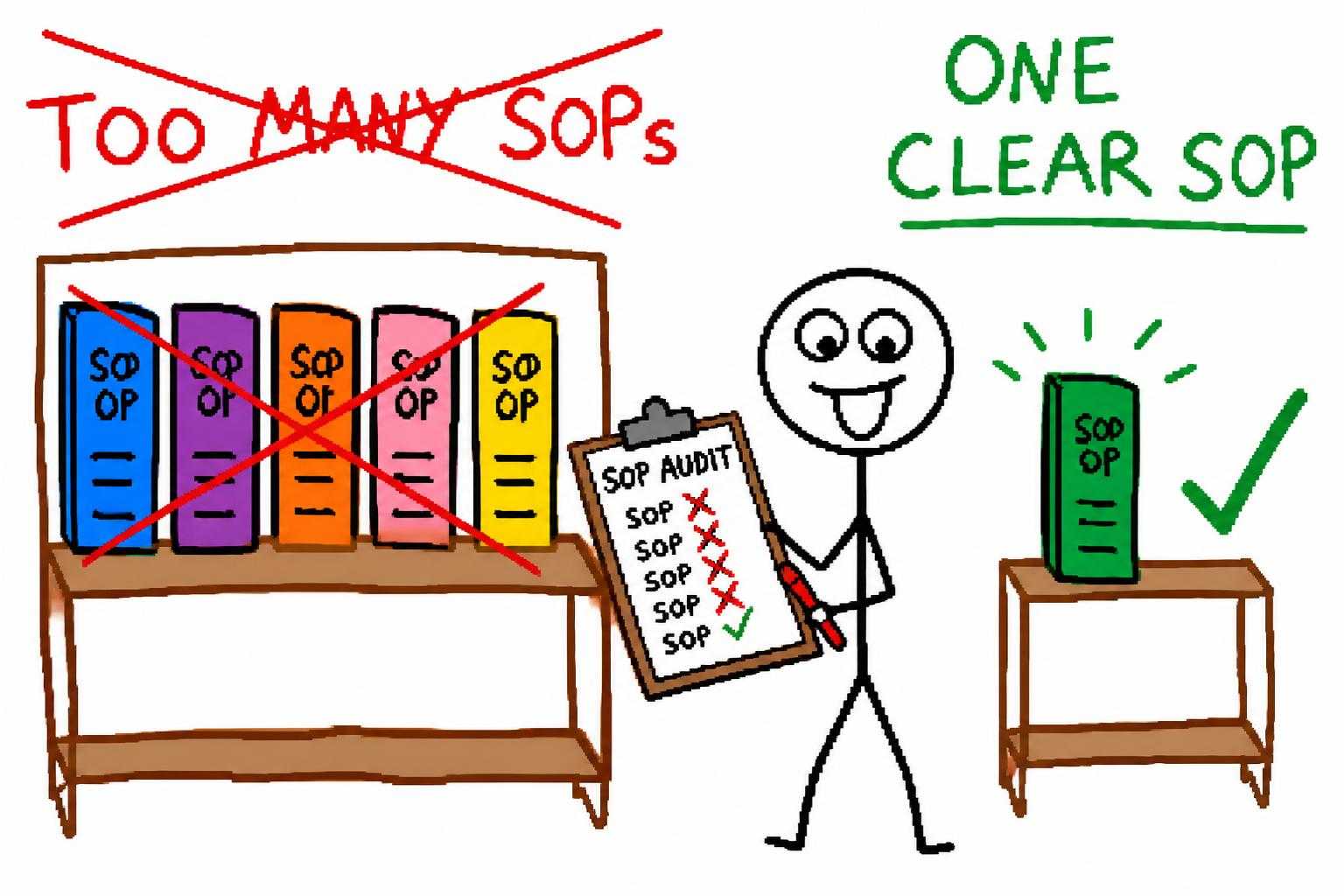
A multinational pharma company came to Hurley Write with a compliance problem. Their SOP library had grown into a tangle of overlapping documents, inconsistently written and hard to follow. Compliance was suffering, and the team was spending too much time managing documents rather than using them.
We ran a gap analysis to map what they had, identify duplicates, and flag inconsistencies. From there, we worked with their team to standardize the library: clearer language, consistent structure, fewer documents that actually said what they meant.
The result: measurable compliance improvement and resources freed up that were previously spent managing SOP redundancy. When the documents are clear and consistent, the process runs the way it's supposed to. Sound familiar? Hit reply and tell me what your documentation pain point is right now. |
|
|
|
The pressure alarm that buried its own point |
Every issue we create a fictional sample of regulated-industry writing and show how a few changes make it clearer. Original
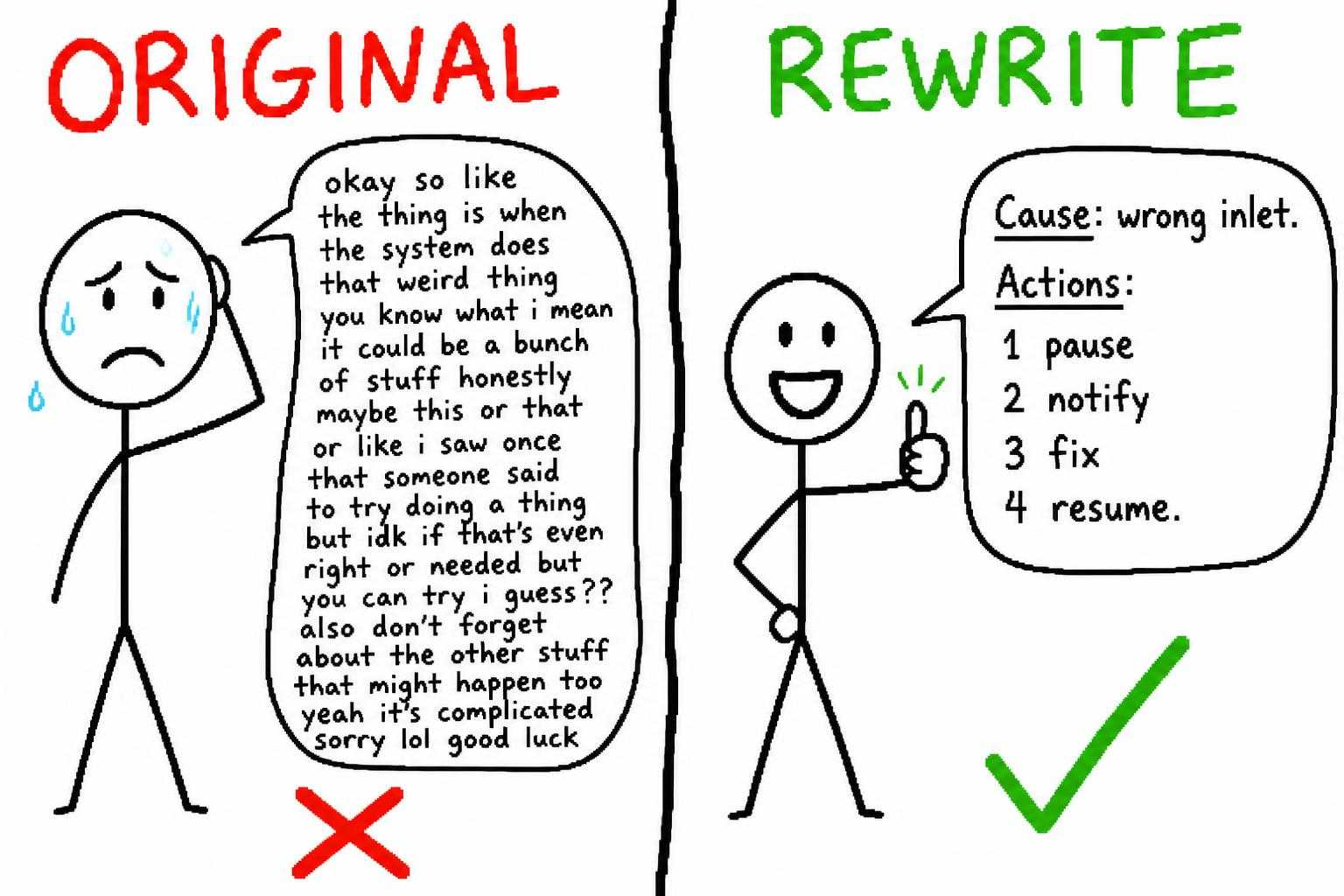
On 11Sep24, during step 6.8.19 of SOP153, a High pressure alarm triggered because the formulation buffer was erroneously connected to Inlet 2D, which was below the minimum amount (<2ml of the required 18ml). This introduced air into the system and caused the High pressure alarm. Operators paused the recipe after turning off the alarm, and they phoned Manufacturing Management, Quality, Process Development, and Manufacturing Sciences. To fix the issue, operators manually changed the inlet flowpath from the incorrect inlet 2D to the correct inlet 2E. The recipe resumed without further issue.
Rewrite While completing step 6.8.19 of SOP153 on 11Sep24, a high-pressure alarm triggered. Root cause: Operators had connected the formulation buffer to Inlet 2D (incorrect) instead of Inlet 2E (correct).
Impact: Air was introduced into the system because the buffer volume at 2D was below the required minimum (<2ml of the required 18ml). Actions taken: - Changed the inlet flowpath from 2D to 2E.
-
Paused the recipe and silenced the alarm.
- Notified Manufacturing Management, Quality, Process Development, and Manufacturing Sciences.
- Resumed the recipe.
Why it works
The original reads as one continuous paragraph that buries the cause and doesn't separate what happened from what was done about it. A reader must read everything before getting to the "meat." The rewrite leads with context (what, when, which step), states the root cause immediately, and converts the corrective actions into a numbered list the reader can verify step by step. Same facts. Clearer path through them. |
|
|
|
Thanks for reading!
Don't want to receive these emails? There's an unsubscribe button at the bottom. Copyright © 2026 Hurley Write. All rights reserved.
19701 Bethel Church Rd., Ste 103-144, Cornelius, NC 28031 |
|
|
|
Disclaimer: The documents shown in this newsletter are fictional samples created by Hurley Write for illustrative and educational purposes only. Any names, companies, data, or scenarios depicted are invented and do not represent real clients, organizations, or events. These materials should not be mistaken for, or used as, an actual client's work product. |
|
|
|
|