Hey, it's Pam
This week I'm looking at a habit that costs teams more review cycles than almost any other writing problem I see. It shows up in every regulated industry, and most companies don't realize it's a problem until it's too late. In this email, I talk about a fire caused because of confusing SOPs. Got a sentence that took you three reads to understand? Hit reply and send it to me. I bet I can cut it in half. In this issue: -
How to overcomplicate simple ideas
- The good, the bad, the ugly: Copy Makeovers
- When bad SOPs start real fires
|
|
|
|
Overcomplicating simple ideas |
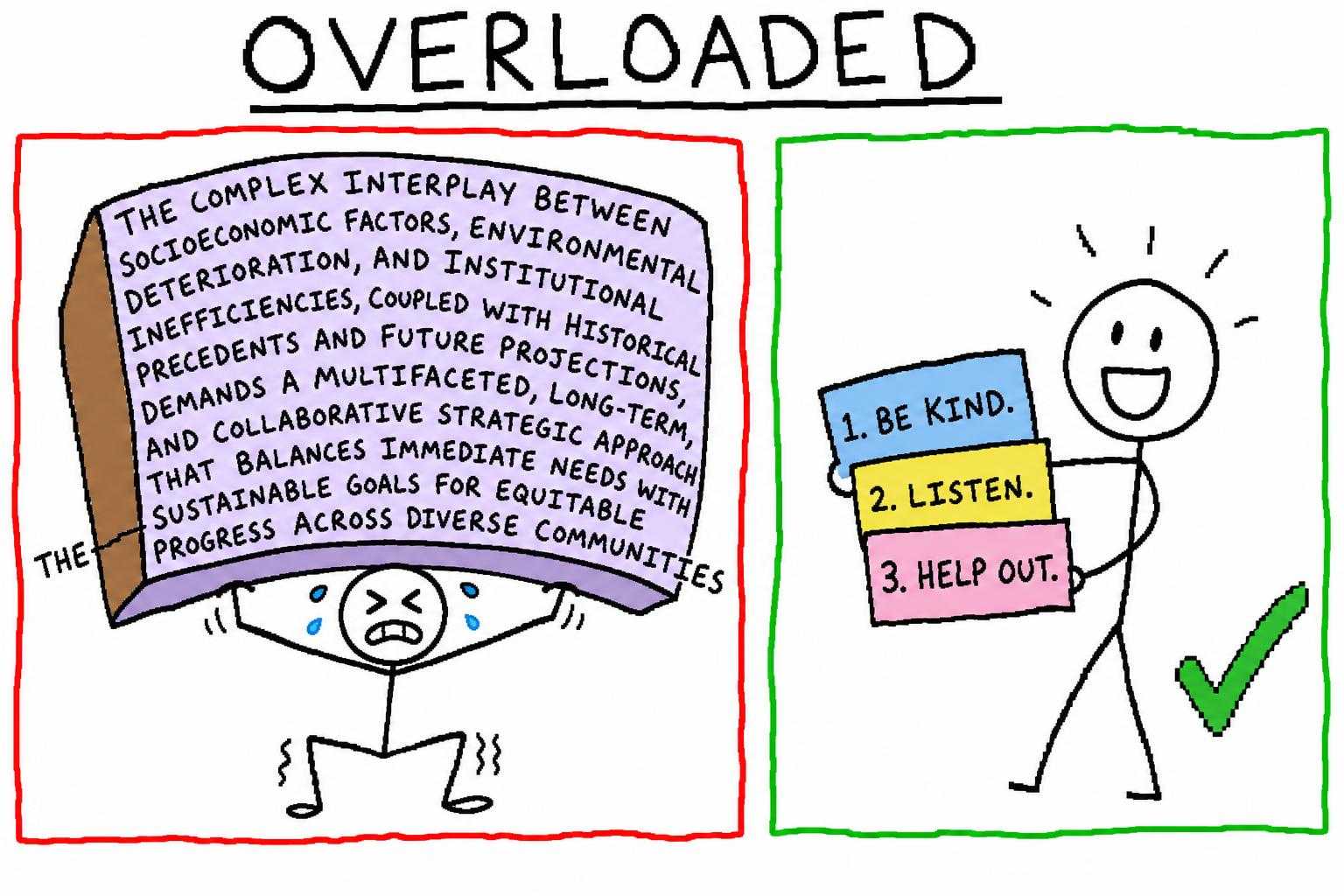
Here's one I see in almost every regulated document. Too many words overcomplicating a simple idea. I've talked to more professionals than I can count who believe that more words equal better writing. It doesn't.
When a sentence carries too many words, the reader has to parse it multiple times before they can act on it. In high-stakes environments, that slows reviews and increases the chance that something important gets missed.
The fix is simple. Consider if every word adds value; if the true verb is being used (writers often change verbs into nouns, which you know about if you've taken one of our writing workshops); and what information the reader actually needs. -
Before: "Following verification of material integrity and confirmation that all pre-transfer checks were completed satisfactorily, the operator should proceed with initiation of the transfer sequence in accordance with applicable procedures."
- After: "After material integrity has been verified and pre-transfer checks confirmed, initiate the transfer sequence per SOP-XXX."
Same information but faster to read: "verify" and "confirmed" are the real verbs, which were nouns in the original and we refer the reader to the actual SOP, in addition to reducing the number of words. If this were an SOP, the format would be much different. The rewrite is faster to read, easier to review, and harder to misinterpret. |
|
|
|
When bad SOPs start real fires |
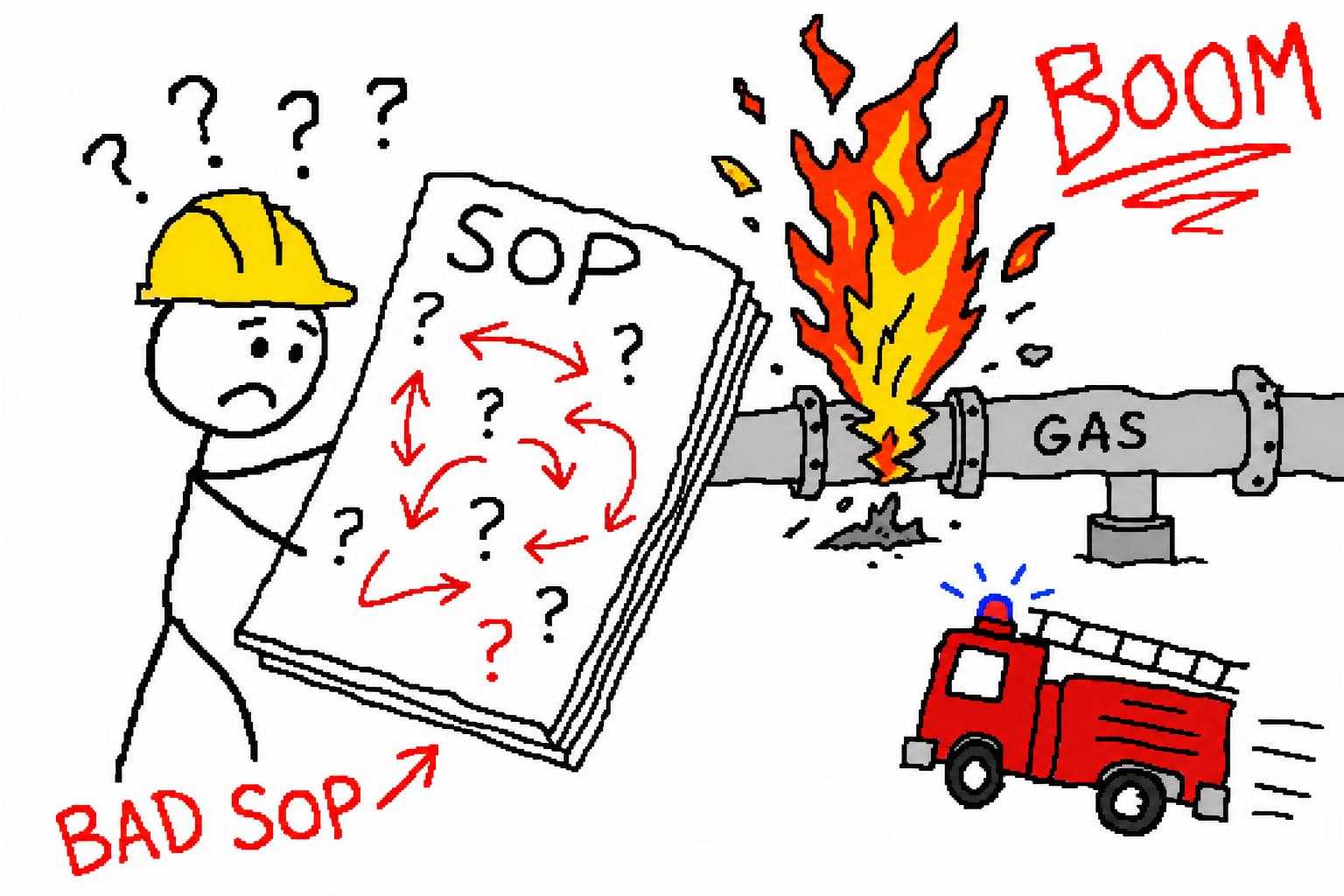
Contractors for a utility company drilled into a natural gas line. A large fire broke out. Two homes were significantly damaged and 100 firefighters responded. An unfortunate accident, but one that was caused by poorly written SOPs.
Employees had been complaining for years about the SOPs: hard to follow, hard to find, too many procedures, too much information. Some knew the SOPs were wrong but feared losing their jobs if they didn't follow them or if they spoke up.
If your company isn't treating its SOPs as insurance against accidents, that's a risk worth fixing. We'll review one of yours and give you honest feedback on it. |
|
|
|
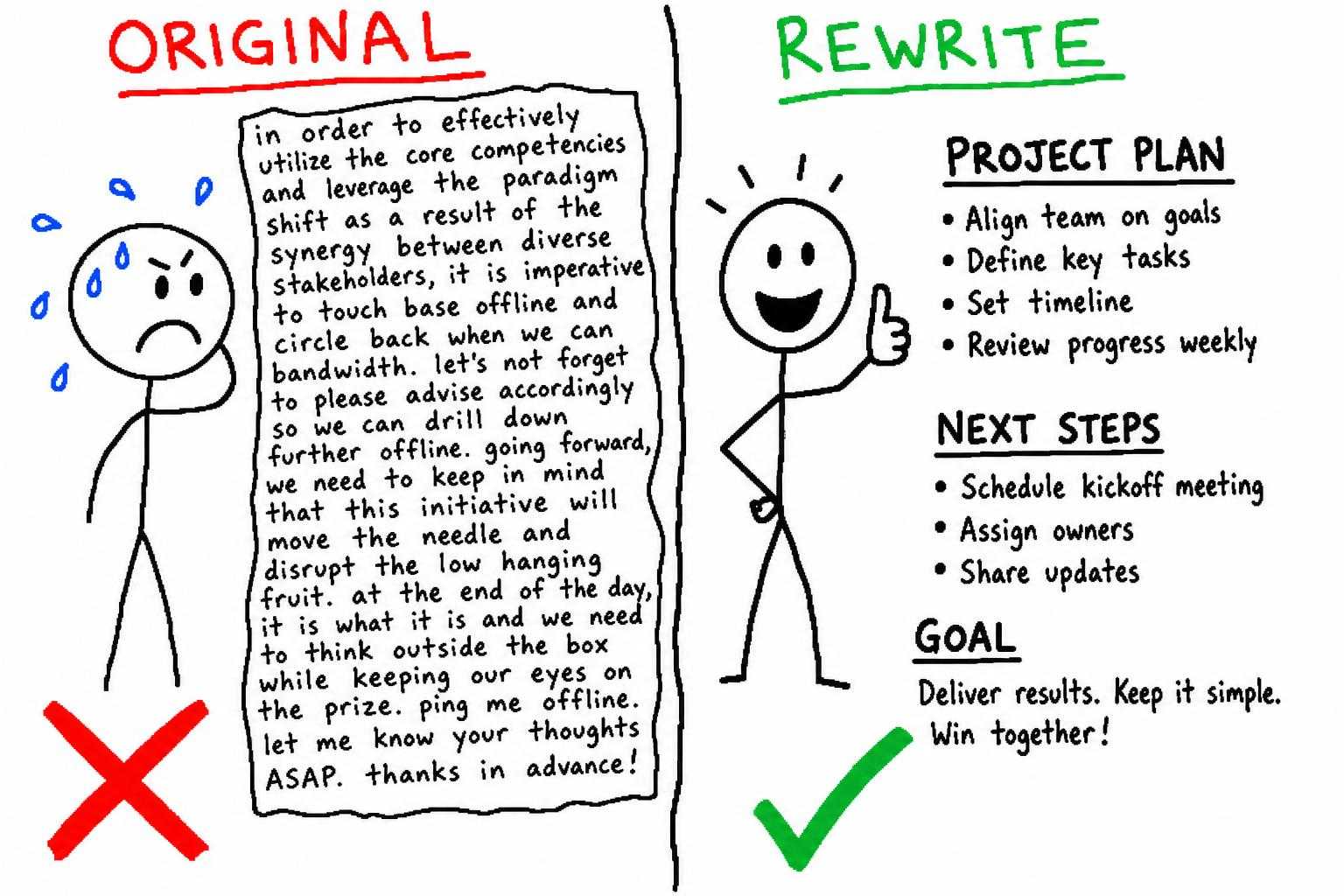
Each issue, we create a sample of regulated-industry writing and show how a few changes make it clearer. Original
Impact and Risk Analysis: There is no impact since the defect was caught prior to infusion and was not administered to the patient. There was impact to the bag as it was breached and could not be administered to the patient. Investigation Summary and Conclusion: Review of the packout and shipment process did not yield any deficiencies or potential issues that could have led to the cracked bag. Review of the manufacturing, labeling and re-labeling process did not yield any deficiencies or potential issues that could have led to the cracked bag. Review of the clinical site receipt indicated that there were issues with opening the cassette which could have caused the cracked bag. A new cassette with a swing arm closure has been implemented which is expected to mitigate future cracked bags caused by handling and opening the cassette. This is due to the swing arm being much easier to operate than the previous closure.
Rewrite Impact and Risk Analysis - No impact to the patient, as breach was caught prior to infusion.
-
Bag impacted as it was breached and could not be administered to the patient.
Investigation Summary and Conclusion Deficiencies or potential issues leading to cracked bag:
- None: Packout and shipment process; Manufacturing, labeling and relabeling process
- Clinical site receipt: issues opening the cassette
Actions Taken: A new cassette with a swing arm closure has been implemented, which should mitigate cracked bags caused by handling and opening the cassette. Why it works
In the original, impact and risk analysis is first, which is great! However, bulleting the impact and bolding the main subjects: "no impact to patient" (most important) and "bag impacted" (second most important) would have highlighted that information. Bolding and bulleting draw the eye so that a reader can easily pick out important information; while it's a common misconception that bullets should be used for every list, that's not true. They're a rhetorical tool that should be used only for emphasis. We kept the investigation summary heading from the original but bulleted it for findability, and grouped the two processes that had no bearing on the cracked cassette. We also added an "Actions Taken" section. Burying everything in one paragraph makes the reader work too hard as does no headings/subheadings.
|
|
|
|
Thanks for reading!
Don't want to receive these emails? There's an unsubscribe button at the bottom. Copyright © 2026 Hurley Write. All rights reserved.
19701 Bethel Church Rd., Ste 103-144, Cornelius, NC 28031 |
|
|
|
Disclaimer: The documents shown in this newsletter are fictional samples created by Hurley Write for illustrative and educational purposes only. Any names, companies, data, or scenarios depicted are invented and do not represent real clients, organizations, or events. These materials should not be mistaken for, or used as, an actual client's work product. |
|
|
|
|