Each issue, we create a sample of regulated-industry writing and show how a few changes make it clearer.
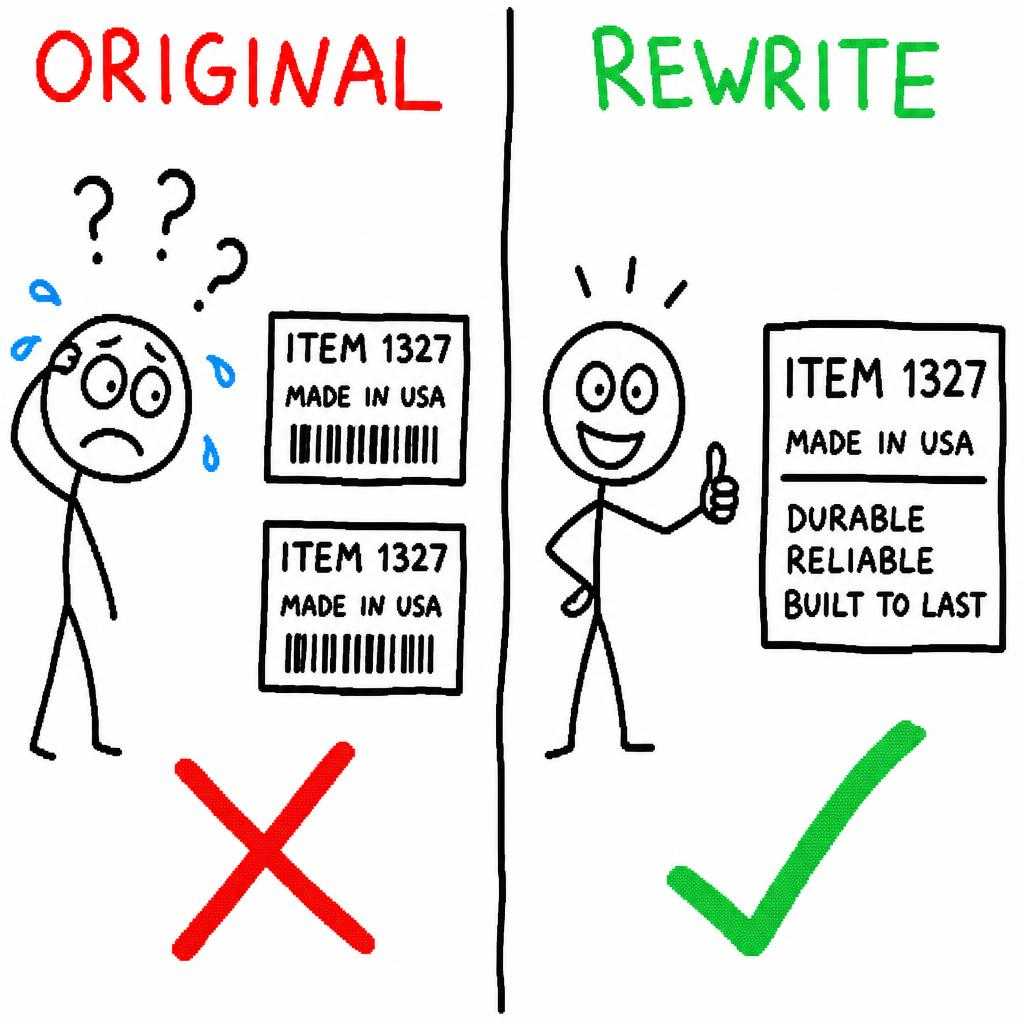
Original
Manufacturing associates who receive materials into the cleanroom document information such as lot number and expiration date; however, disposition status is not something they are trained to focus on. The expectation is that there are checks and balances prior to materials entering the cleanroom to ensure they are appropriate for commercial use. Moreover, the label for "Approved for Specific Use" materials is white and it's not uncommon for Manufacturing associates to receive Conditionally Approved materials for commercial use which are also on white labels. There are no visual cues helping users understand critical information more quickly and efficiently.
Rewrite
This error occurred because materials that had not been approved for commercial use were sent to the cleanroom; these materials were affixed with "Approved for Specific Use" labels, which are white. The label for "Conditionally Approved" materials, which Manufacturing Associates are used to receiving, is also white.
This cause of this error is twofold:
1. Both "Approved for Specific Use" and "Conditionally Approved" labels are white, so Manufacturing Associates confused the two.
2. Checks and balances to ensure the appropriate material was sent to the cleanroom failed.
Why it works
The original contains unnecessary information, is wordy, and follows a common but flawed structure: it explains why the problem exists before naming the real issue. The real problem is the identical white labels. But because the explanation comes first, readers treat it as the most important point. Readability studies confirm this: readers anchor on the first information they encounter. The rewrite gets straight to the point by explaining what caused the issue.